Turn account intent into pages that actually convert
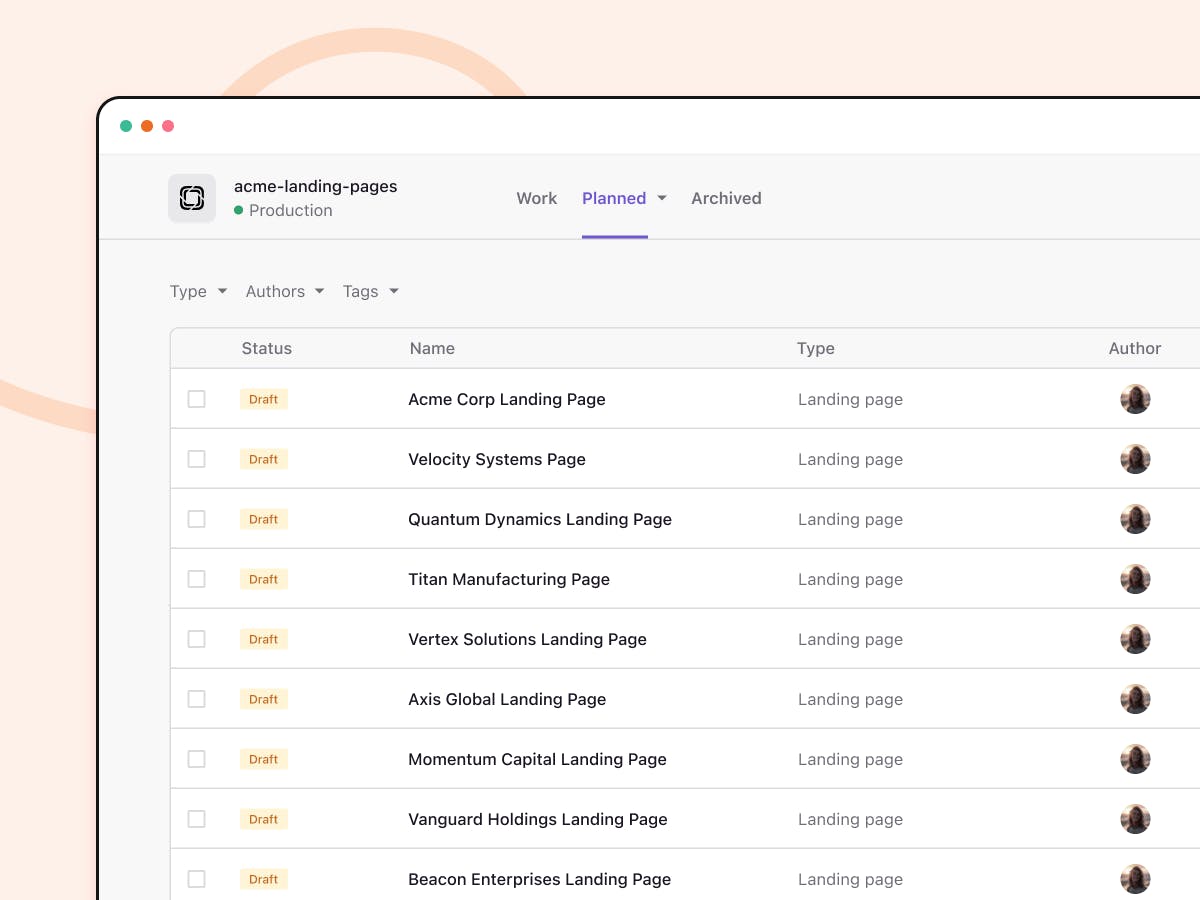
You're evaluating ABM tools and keep seeing Prismic and Demandbase mentioned together, but they solve fundamentally different problems. Demandbase identifies which accounts to target and runs ads to reach them. Prismic generates the personalized landing pages those accounts land on.
This comparison breaks down where each tool fits in an ABM stack, what features actually matter for your workflow, and when it makes sense to use one, the other, or both together.
Quick comparison of Prismic and Demandbase for ABM
Prismic and Demandbase solve different problems in an ABM workflow. Demandbase is a full-funnel ABM platform that helps you identify target accounts, track intent signals, and run advertising campaigns. Prismic, on the other hand, is a standalone ABM landing page builder that generates personalized pages at scale. They're not competitors, they're complementary tools that often work together in the same tech stack.
Prismic ABM vs. Demandbase ABM
| Prismic ABM landing page builder | Demandbase ABM | |
Primary function | ABM landing page builder | Full-funnel ABM platform |
Best for | Marketing teams scaling personalized pages | Enterprise ABM orchestration |
Landing page creation | Generate hundreds from one base page | Limited native page building |
Intent data | Integrates with Clay, enrichment tools | Native intent data included |
Pricing model | Usage-based, marketing-focused | Enterprise licensing |
Implementation | Marketing team can launch same day | Requires technical setup |
What is Demandbase One
Demandbase One is an enterprise ABM platform that combines account identification, intent data, B2B advertising, and sales intelligence. The platform tracks which keywords your target accounts are researching online, then uses that data to score accounts and predict buying readiness.
One of Demandbase's distinguishing features is its built-in B2B demand-side platform (DSP), a system for buying programmatic advertising. This means you can run display ads, video ads, and connected TV campaigns directly through Demandbase, all targeted at specific accounts.
The platform is typically adopted by large organizations with dedicated ABM teams and the budget for enterprise software.
What is Prismic's ABM landing page builder
Prismic's ABM landing page builder is a marketing-first tool for creating personalized landing pages without developer involvement. It's separate from Prismic's headless CMS but built on the same underlying architecture.
The workflow starts with a single base page that locks in your design, brand voice, and structure. From there, you upload account data, including company names, industries, firmographics, CRM fields, or enrichment data from tools like Clay. Prismic then generates dozens or hundreds of page variations, each tailored to a specific account's context.
Rather than simple token swapping (replacing "{{company_name}}" with "Acme Corp"), the system looks for meaningful angles in your data. It adapts headlines, framing, use cases, and proof points based on industry context and likely pain points.
Teams can even run true 1:1 advertising by combining Clay and Prismic. You can generate personalized landing pages directly from Clay using account-level data, then connect those pages to your ad campaigns so each account clicks through to a page built specifically for them. This setup works especially well for LinkedIn ads, where messaging, targeting, and landing pages can all align at the individual account level. Our team has successfully used this approach to run highly targeted LinkedIn campaigns end to end.
Why teams compare Prismic and Demandbase for ABM
Both tools promise to help you deliver relevant experiences to target accounts, which is why they show up in the same searches. The real question is where your bottleneck sits.
Slow ABM landing page production
Many teams have the data and the strategy, but campaigns still launch late. Personalized pages require design, copy, and development resources that aren't always available when you need them.
- The production gap: Manual page creation can't keep pace with ABM campaign timelines
- The downstream effect: Sales loses momentum when landing pages don't match outbound timing
High ABM platform costs and complexity
Enterprise ABM platforms often bundle features together, such as intent data, advertising, and sales intelligence, creating cost and implementation overhead. If you already have an enrichment stack or intent data source, paying for another one adds expense without adding value.
Limited personalization without developer help
Marketing teams frequently wait on dev tickets for page changes. And when they can make changes themselves, basic "find and replace" personalization feels generic to buyers who now expect relevance at every touchpoint.
Key ABM features compared
Here's how Prismic and Demandbase handle the core capabilities ABM teams typically evaluate.
Intent data and account identification
Demandbase has native intent data and account identification built in. It tracks which keywords accounts are researching and scores them based on buying signals.
Prismic doesn't provide intent signals itself. Instead, it connects to your existing data sources:
- Demandbase: Native intent signals, account scoring, buying stage identification
- Prismic: Accepts data from CRMs, enrichment tools like Clay, and intent platforms
Landing page personalization
This is where the tools diverge most clearly. Demandbase offers website personalization for existing pages, swapping content blocks based on visitor attributes. Prismic generates entirely new page variations.
With Prismic, you upload account data and the system creates variations that adapt headlines, framing, use cases, and proof points based on industry context. Each page is delivered as an editable draft, so marketing reviews and approves before anything goes live.
Workflow and speed to launch
Demandbase requires technical setup and cross-team coordination. Implementation timelines typically span weeks or months, and ongoing use often involves multiple teams.
Prismic's ABM landing page builder is designed for marketing independence. You create a base page, upload a CSV, generate variations, and review drafts in organized batches. VITRONIC, for example, launched 60 personalized pages in about 90 minutes, work that previously took weeks.
Analytics and engagement tracking
Demandbase provides full-funnel attribution and journey analytics across the entire account lifecycle. You can track how accounts move through stages and attribute revenue to specific touchpoints.
Prismic offers personalized URLs and account-level engagement signals, which helps teams measure traction earlier, before revenue fully materializes.
Integrations with ABM tools
Both tools fit into a larger ABM stack:
- Demandbase: Native integrations with Salesforce, HubSpot, Marketo, and major ad platforms
- Prismic: Works with CRM fields, firmographic data, and enrichment tools via CSV upload or API
Why choose Prismic for ABM landing pages
If your primary bottleneck is page production rather than account identification, Prismic's ABM landing page builder addresses that directly.
Marketing-first workflow without developer tickets
Marketers control the entire process from base page to published variations. No engineering queue, no design tickets, no waiting. The workflow stays the same whether you're targeting 10 accounts or 1,000.
Launch personalized pages in minutes
Create your base page, upload your account data, generate variations, review drafts, publish. Speed matches buying windows instead of the other way around.
Deep personalization beyond token swapping
The system finds meaningful angles in your data, including industry context, likely pain points, and relevant use cases, and uses that to tailor the narrative. The result feels like it was written for that account, not assembled from a mail merge.
Brand control across hundreds of pages
The base page locks in your design, brand voice, and structure. Marketing remains the final approver. Drafts come grouped for efficient QA at scale, and teams often spot-check a handful of pages instead of reviewing every single one.
Scale your ABM landing pages
Prismic's ABM landing page builder turns one approved page into hundreds of personalized variations, so your campaigns land on time and convert more target accounts.
Scale your ABM landing pages
Prismic's ABM landing page builder turns one approved page into hundreds of personalized variations, so your campaigns land on time and convert more target accounts.

Why choose Demandbase One for ABM
Demandbase makes sense for teams that want full-funnel orchestration and don't already have an intent data source.
Full-funnel ABM orchestration
Demandbase coordinates targeting, advertising, sales intelligence, and measurement across the entire buyer journey. If you're building an ABM program from scratch and want one platform to manage strategy end-to-end, that's the value proposition.
Native intent data and account scoring
Built-in intent signals help identify which accounts are actively researching solutions like yours. Account scoring prioritizes sales outreach so reps focus on accounts most likely to convert.
Advertising and multi-channel activation
Demandbase functions as a B2B DSP for programmatic advertising. You can target accounts across display, video, LinkedIn, and connected TV, all from the same platform that houses your account data.
Pricing and implementation compared
Demandbase typically requires enterprise-level investment. Pricing is custom and often involves annual contracts with multiple modules. Implementation timelines span weeks to months, and you'll likely need technical resources for setup and ongoing management.
Prismic's ABM landing page builder is marketing-team accessible. The pricing model is usage-based and focused on page generation. Teams can start producing personalized pages the same day, with technical implementation included as part of the solution.
Prismic ABM vs. Demandbase ABM
| Prismic ABM landing page builder | Demandbase ABM | |
Pricing model | Usage-based | Enterprise licensing |
Contract structure | Flexible | Annual contracts typical |
Time to first value | Same day | Weeks to months |
Technical resources needed | None | Yes |
How to choose between Prismic and Demandbase
The right choice depends on which ABM bottleneck you're solving.
When Prismic is the better fit
- You want to scale landing page production without adding headcount
- Marketing wants independence from dev and design queues
- You already have account data from CRM, enrichment tools, or intent platforms
- Speed matters, buying windows are short and campaigns launch frequently.
When Demandbase is the better fit
- You want native intent data and don't have an existing enrichment stack
- Full-funnel orchestration across ads, sales, and measurement is the priority
- You're building an enterprise ABM program from scratch with dedicated resources
Using Prismic and Demandbase together
Prismic and Demandbase aren't mutually exclusive. Many teams use Demandbase to identify and prioritize accounts, then use Prismic to generate the personalized landing pages those accounts land on after clicking an ad or email link.
Demandbase becomes the “brains” of the ABM program, figuring out who to target and how to reach them. Prismic becomes the front-end content delivery, ensuring the destination matches the promise of the campaign.
Build ABM landing pages that convert
Modern ABM requires personalized destinations that match campaign promises. Buyers who experience a truly tailored message from one vendor start expecting that level of relevance everywhere, including the landing page that continues the conversation.
Prismic's ABM landing page builder turns one approved page into hundreds of personalized variations using the data you already have. Campaigns land on time, personalization feels genuine, and you convert more of the accounts you're working hardest to win.
Ready to convert accounts in a flash?
Stop guessing. Deliver personalized landing pages for your ABM campaigns. All it takes is a couple of clean data points paired with the click of a button.
