6 Best Headless CMS for Personalization 2026 (ABM, E-commerce, etc)
 By Alison Brunk
When your marketing strategy depends on personalization, whether that's ABM campaigns targeting named accounts, ecommerce pages that adapt by region, or landing pages built for specific buyer segments, your CMS has to support it. This guide evaluates six headless CMS platforms for personalization in 2026: Prismic, Contentstack, Contentful, Storyblok, Optimizely, and Bloomreach.
TL;DR (key takeaways)
- Personalization in a headless CMS context covers content variants, audience rules, A/B testing, CDP integration, and geo-targeting. Not every platform handles all five equally well.
- Prismic is the strongest choice for B2B teams running ABM programs at scale. Its ABM landing page builder generates hundreds of account-personalized pages from a single blueprint and a CSV of account data. The AI adapts headlines, pain points, use cases, and proof points to each account's context, rather than just switching company names.
- Contentstack is a solid option for enterprise teams that want content management, a native real-time CDP, A/B/n testing, and journey orchestration all in one platform.
- Contentful handles A/B testing and audience segmentation directly in the CMS editing interface through Contentful Personalization, with AI Suggestions that reduce much of the manual setup.
- Storyblok is great for ecommerce and multi-market teams that need to personalize at the component level using tools like VWO or Dynamic Yield.
- Optimizely suits teams where experimentation is core. Its CMS and Web Experimentation share the same system.
- Bloomreach is built for ecommerce personalization at scale and has an AI solution that powers real-time web personalization, predictive analytics, and search.
What "personalization" means in a headless CMS context
Personalization means different things depending on the situation. In a headless CMS context, it typically covers:
- Content variants that store different versions of the same page or block in the CMS and deliver the right one based on who's viewing.
- Audience rules for determining which variant goes to which user, based on factors such as behavior and firmographics.
- A/B and multivariate testing to run controlled experiments on different versions of the same content and measure which one drives conversion.
- CDP integration so that first-party data flows into the CMS, and audience segments determine what each visitor sees in real time.
- Geo-personalization so you can serve different content based on a user's country, region, or city.
Check out our headless CMS guides
Explore our headless CMS guides, which cover the subject matter in detail.
Platform | Best for | Personalization approach | CDP or data integration |
|---|---|---|---|
Prismic | AI-powered ABM personalization at scale | ABM landing page builder, SEO landing page builder, Slice variations | HubSpot, Salesforce, Clay, Clearbit via CSV upload |
Contentstack | Real-time omnichannel personalization | A/B/n testing, journey orchestration, predictive cohorts | Native real-time CDP, 200+ data connectors |
Contentful | AI-assisted audience experimentation | Contentful Personalization with A/B/n testing, audience segments, AI Suggestions | Built-in integrations for Segment, Salesforce CRM, Klaviyo, Shopify, SAP Emarsys, and more |
Storyblok | Plugin-driven personalization | Via VWO, Dynamic Yield, Optimizely, and Ninetailed integrations | CDP data flows through Ninetailed (connects to Segment) and Dynamic Yield |
Optimizely | Continuous web experimentation | Personalization and Web Experimentation on a shared delivery layer | Optimizely Data Platform with third-party CDP sync and Google Analytics 4 audiences |
Bloomreach | Ecommerce personalization at scale | Loomi AI web personalization, contextual personalization, A/B testing via Experiments product | Bloomreach Engagement native CDP, Twilio Segment named integration, external CDP via JSON import |
Best Headless CMS for Personalization
1. Prismic
Best for: AI-powered ABM personalization at scale
Prismic is a headless website builder designed specifically for marketing websites. Where most headless CMS platforms are built for content delivery across any channel, Prismic is focused on one thing: helping teams build and manage websites faster, with developers building components and marketers publishing pages independently.
Personalization strengths
- The ABM landing page builder lets you build one blueprint page, upload a CSV with account data from tools like HubSpot, Salesforce, Clay, or Clearbit, and walk away with dozens to hundreds of personalized page variants. The AI adapts headlines, pain points, use cases, and proof points based on each account's context, not just switching company names.
- Personalization works at the narrative level. Each account gets messaging that reflects its industry and likely pain points, not a generic page with the company name swapped in.
- The ABM landing page builder returns all generated pages as editable drafts, and you can review, approve, and publish all variants at once rather than individually assessing each page.
- Every page gets its own traceable URL, so account-level engagement tracking works from day one.
- The SEO landing page builder works the same way, but for search: one blueprint, a CSV of target keywords and intents, hundreds of optimized page variants.
- Your marketing team owns the whole workflow from template creation to publishing, and developers aren’t needed after the initial setup.
- Slices (reusable page sections) can have multiple variations, so developers can build alternative designs for the same section and marketers can pick which one to use in the Page Builder without new development work being needed for every use case.
Personalization limitations
- Prismic generates page variants before they go live, not at runtime, meaning that it does not change what a page shows a visitor based on live session behavior or CDP segment data in the moment.
- Not built for B2C personalization driven by browsing history, cart activity, or real-time behavioral triggers.
- The Page Builder is only as flexible as the Slice library allows. Adding a new section type still requires a developer.
- Prismic is focused on helping content and marketing teams create and manage on-brand websites and isn’t ideal if your team needs content delivered to mobile apps, kiosks, or other non-web channels.
- The ABM landing page builder is a newer product and less established than platforms like Mutiny or Intellimize.
Pricing
- Free
- Starter ($10/month)
- Small ($25/month)
- Medium ($150/month)
- Platinum ($675/month)
- Enterprise (Custom)
Resources
2. Contentstack
Best for: real-time omnichannel personalization
Contentstack describes itself as an Agentic Experience Platform that combines content management and personalization capabilities.
Personalization strengths
- Contentstack’s built-in real-time CDP (via Lytics) handles first-party data ingestion, real-time identity resolution, and audience segmentation inside the same platform where you manage your content.
- Connects to 200+ native data connectors and includes warehouse sync and live streaming from Snowflake or BigQuery.
- Enables A/B/n testing with multiple content variants, audience targeting, conversion-based metrics, and flexible traffic split options.
- Orchestrate real-time omnichannel customer journeys using a visual drag-and-drop canvas with event-based triggers, so you can quickly adjust customer journeys and keep experiences consistent across all channels.
Personalization limitations
- Contentstack is built for enterprise teams with dedicated technical resources. The initial setup requires meaningful engineering investment.
- Pricing is not publicly listed, and you must go through their sales cycle.
- The platform's breadth means smaller teams may face feature overload relative to their needs.
Pricing
- Available on request
Resources
3. Contentful
Best for: AI-assisted audience experimentation
Contentful is a widely adopted composable content platform that's built around the idea that content should be modular, reusable, and deliverable to any channel.
Personalization strengths
- Audience segments are built using behavioral signals, intent data, CRM or CDP data, and other events, and they update automatically as new data comes in.
- A/B, A/B/n, and multi-variant testing can be set up directly inside the content editor, so teams can run experiments without needing developer support.
- AI suggestions save time by recommending audience groups and content variations based on your past content, brand style, and previous test results.
- Location-based personalization lets teams serve content by region directly from the CMS, without you having to duplicate or manage multiple content structures.
- Native data connections integrate CDPs (including Segment), CRMs, and marketing platforms directly into the audience builder.
- Comes with integrations for tools like Segment, Salesforce, and other CRM and marketing platforms, so teams can pull in customer data and use it to build and refine audience targeting inside the CMS.
Personalization limitations
- There’s no native CDP, so you’ll have to connect a third-party CDP through a data connection to access and use first-party customer data for building and refining audience segments.
- Contentful is already a highly-priced platform. On top of that, its Personalization solution is an add-on service with its own fee, and you’ll need to book a call to find out the cost.
- The setup process has become more complex as the platform has shifted toward larger enterprise customers, and teams without dedicated technical resources struggle to maximize the platform.
Pricing
- Free
- Lite ($300/month)
- Premium (custom pricing)
Resources
4. Storyblok
Best for: plugin-driven personalization
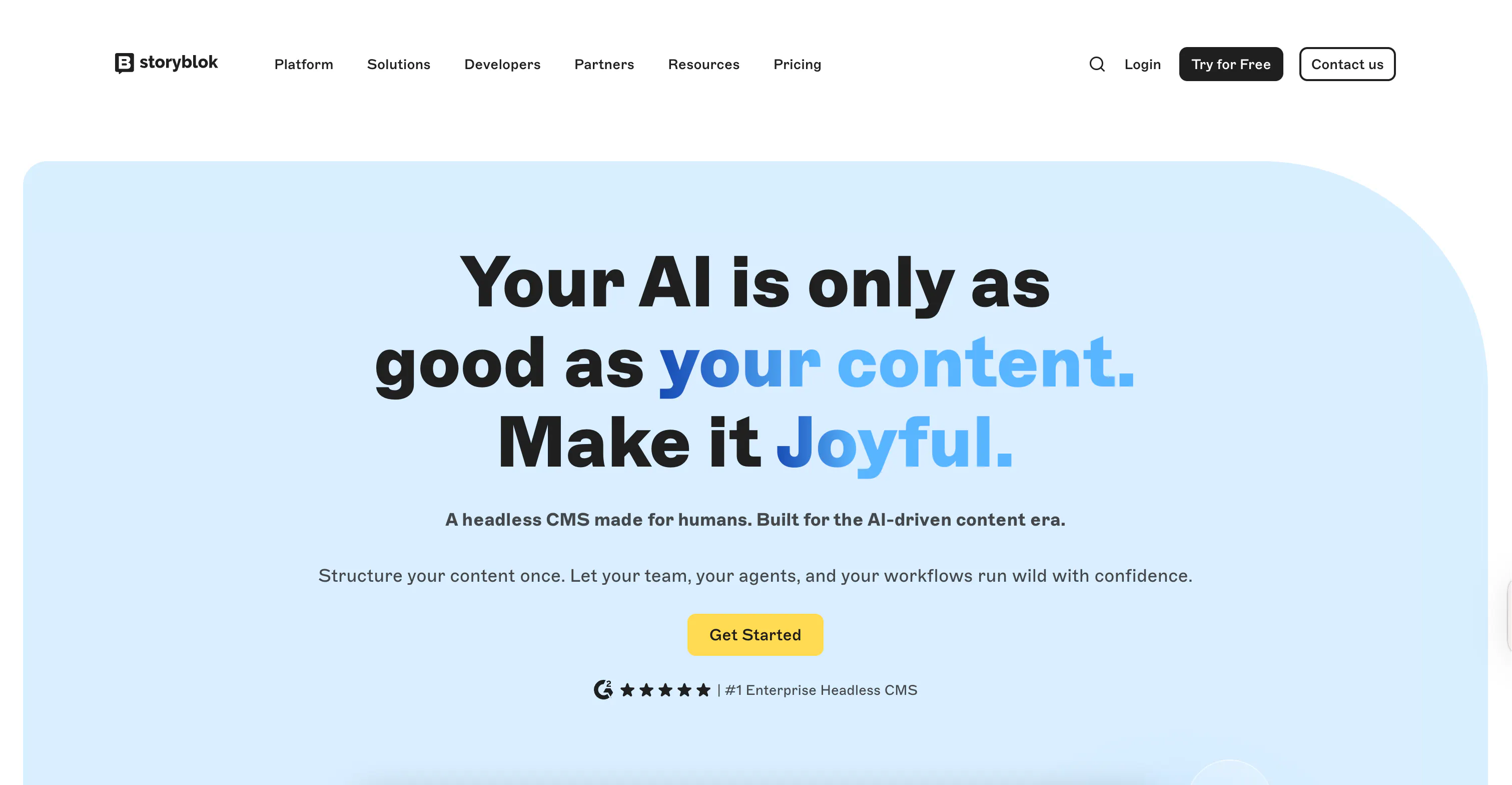
Storyblok is a headless CMS with a visual editor at its core, built for teams that want developer flexibility without taking the editing experience away from marketers.
Personalization strengths
- Its component-level content modeling lets teams localize or personalize individual blocks, such as banners or product sections, without duplicating full pages.
- The visual editor lets teams preview and edit personalized, localized content directly on the page, switch between regions and languages, test variations, and publish changes without a developer.
- There’s a VWO plugin that adds A/B testing directly inside Storyblok’s Visual Editor, so marketers can test different elements without leaving the CMS.
- Storyblok also integrates with tools like Dynamic Yield for one-to-one personalization, including product recommendations and targeted promotions, as well as with Optimizely and Ninetailed for other personalization use cases.
Personalization limitations
- There’s no native CDP, so you must connect a separate CDP or data source to bring in first-party audience data before you can use it for personalization.
Pricing
- Starter (Free)
- Growth (€90.75/mo)
- Growth Plus (€319.91/mo)
- Premium & Elite (Custom)
Resources
5. Optimizely
Best for: continuous web experimentation
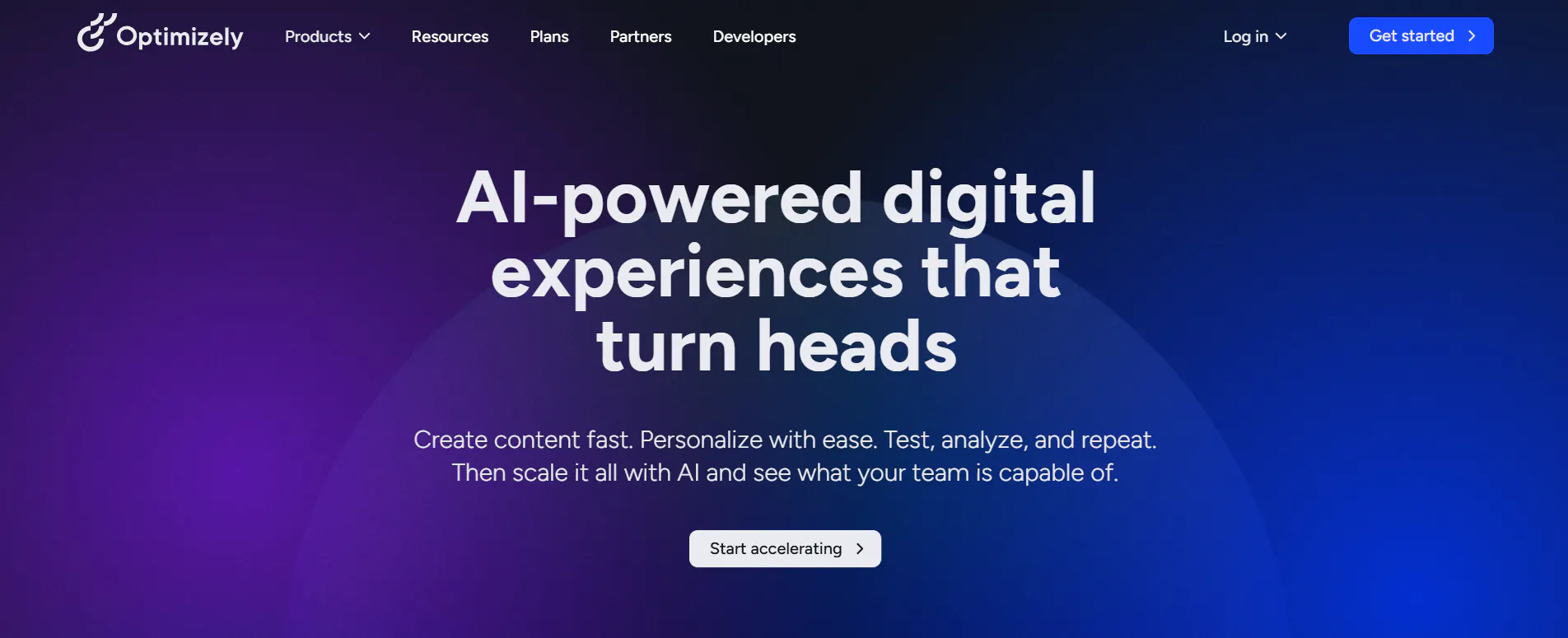
Optimizely started as a web experimentation platform and has since expanded into a full digital experience suite.
Personalization strengths
- There’s a behavioral targeting system that personalizes experiences based on how users interact with the site, using signals like browsing history and past engagement to decide what to show next.
- Teams can run A/B tests directly inside a personalized campaign and compare different versions for a specific audience.
- Optimizely uses automatic traffic optimization and edge delivery to route more users to the best-performing content versions while gradually reducing the frequency with which weaker versions are shown.
- Optimizely Data Platform (ODP) brings first-party audience data into one place and lets you integrate external CDPs and Google Analytics 4 audiences for targeting.
Personalization limitations
- Personalization and Web Experimentation are sold as separate products, and you need both if you want to run A/B tests within a personalization campaign.
- Pricing is not publicly listed, so you will need to have a sales conversation to get the numbers.
- Some advanced features, like server-side testing and custom integrations, still need a developer to set up.
Pricing
- Available on request
Resources
6. Bloomreach
Best for: ecommerce personalization at scale
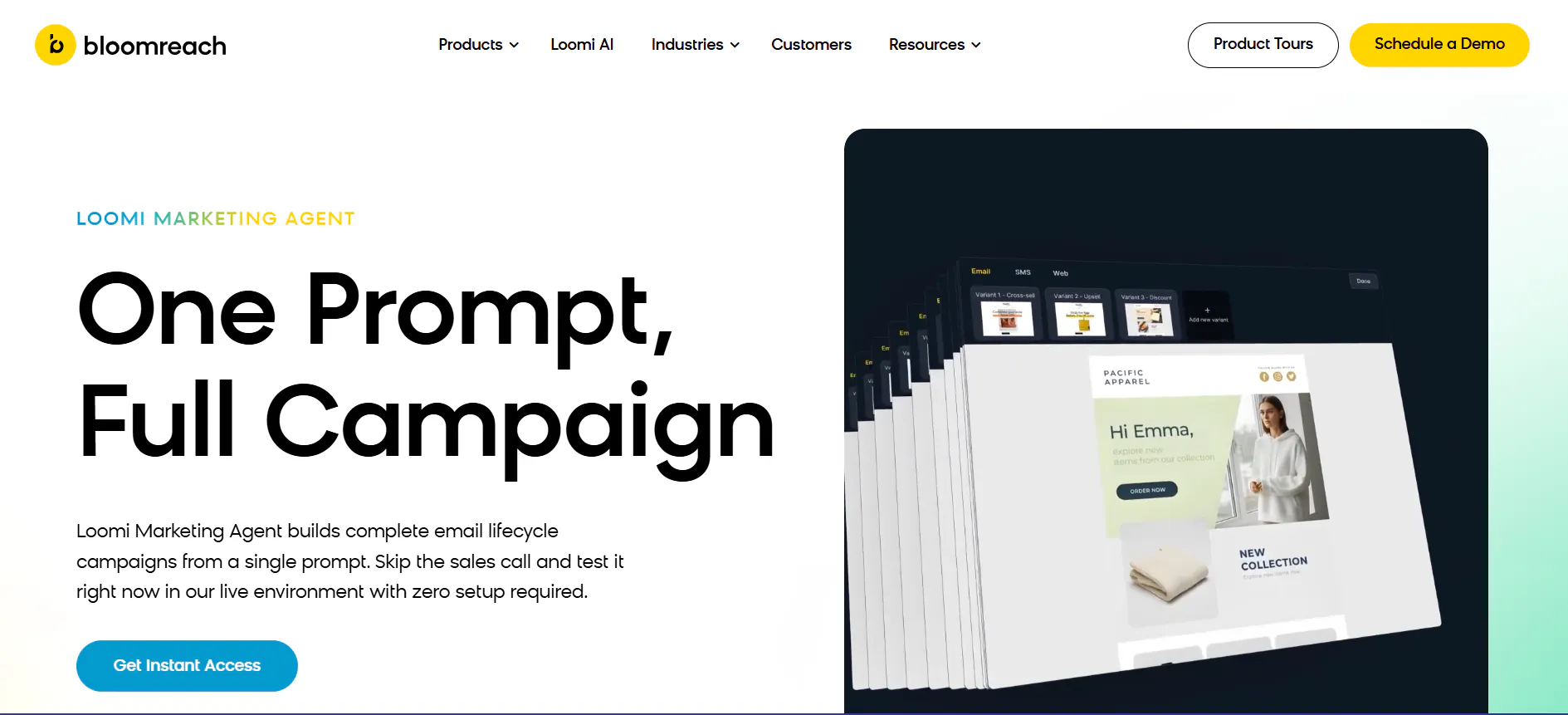
Bloomreach is an enterprise commerce experience platform. Its product suite covers a headless CMS, AI-powered search and merchandising, marketing automation, and more.
Personalization strengths
- Bloomreach's AI engine, Loomi, builds a unified customer profile from every known and anonymous interaction, covering events, customer attributes, actions, and predicted behaviors, and updates it in real time as new interactions happen.
- Web personalization is delivered through a feature called Weblayers, which lets teams trigger real-time banners, pop-ups, and on-site notifications based on actions a visitor has taken across email, SMS, or mobile.
- During A/B tests and personalization experiments, Bloomreach uses its own flicker-free technology so visitors only ever see the intended experience, with no flash of the wrong content while the page loads.
- Bloomreach has a contextual personalization feature that serves what is most relevant to each individual based on their specific context in that moment.
Personalization limitations
- Bloomreach is built for ecommerce and may not be the right option if you’re running B2B ABM campaigns or managing a non-commerce marketing site.
- Pricing is not publicly listed, and each product has its own separate price. Also, Blooomreach only offers annual plans.
- Getting everything set up requires significant technical investment, especially for teams implementing more than one Bloomreach product at the same time.
Pricing
- Available on request
Resources
ABM content personalization: how to use a headless CMS for account-based marketing
If you're running ABM, you already know the core problem. You spend weeks crafting the perfect message for a target account, only to have them land on the same generic landing page.
Here’s how to apply a headless CMS to your ABM program and improve its effectiveness.
1. Start with your content model
Before you generate a single page, your content model needs to support account-level variation. That means structuring your page types so account-specific fields like industry, pain points, use case, and company name live as distinct fields in the CMS, rather than being hardcoded into a template.
Getting this right makes it easy to swap account-specific content without touching the page structure or design. If not, you'll end up rebuilding from scratch for every campaign.
2. Think in tiers
Not every account needs the same level of personalization. Here’s a guide you can follow:
- Use 1:1 when you're targeting a small number of high-value accounts where fully tailored, one-page-per-account treatment is worth the investment.
- Use 1:few when you're working with 20 to 100 accounts that share enough in common (like industry, company size, or use case) that one page per cluster makes sense.
- Use 1:many when you're targeting 500 or more accounts and need three to five template variations that can cover the full list.
3. Use the data you already have
Your CRM and enrichment tools already hold what you need: company name, industry, size, pain points, tech stack, etc.
The only thing missing is a CMS that can take that data and turn it into personalized pages without your team having to build each one manually.
Most headless CMS platforms connect to your existing data through one of three ways:
- A direct CRM integration (HubSpot, Salesforce)
- An enrichment tool like Clay or Clearbit that structures and cleans the data before it hits the CMS
- CSV export that you upload directly
Prismic's ABM landing page builder accepts a CSV of account data, which you can export directly from your CRM or pull together using an enrichment tool like Clay.
Once the data is connected, the CMS uses it to populate page variants, whether that's swapping out headlines and pain points, pulling in the right use case, or adjusting the proof points to match the account's industry.
The more structured your data, the more the CMS can do with it. A field that just says “enterprise tech company” gives the personalization engine less to work with than one that specifies the industry, company size, key pain point, and the product they're most likely interested in.
4. Watch out for the review bottleneck
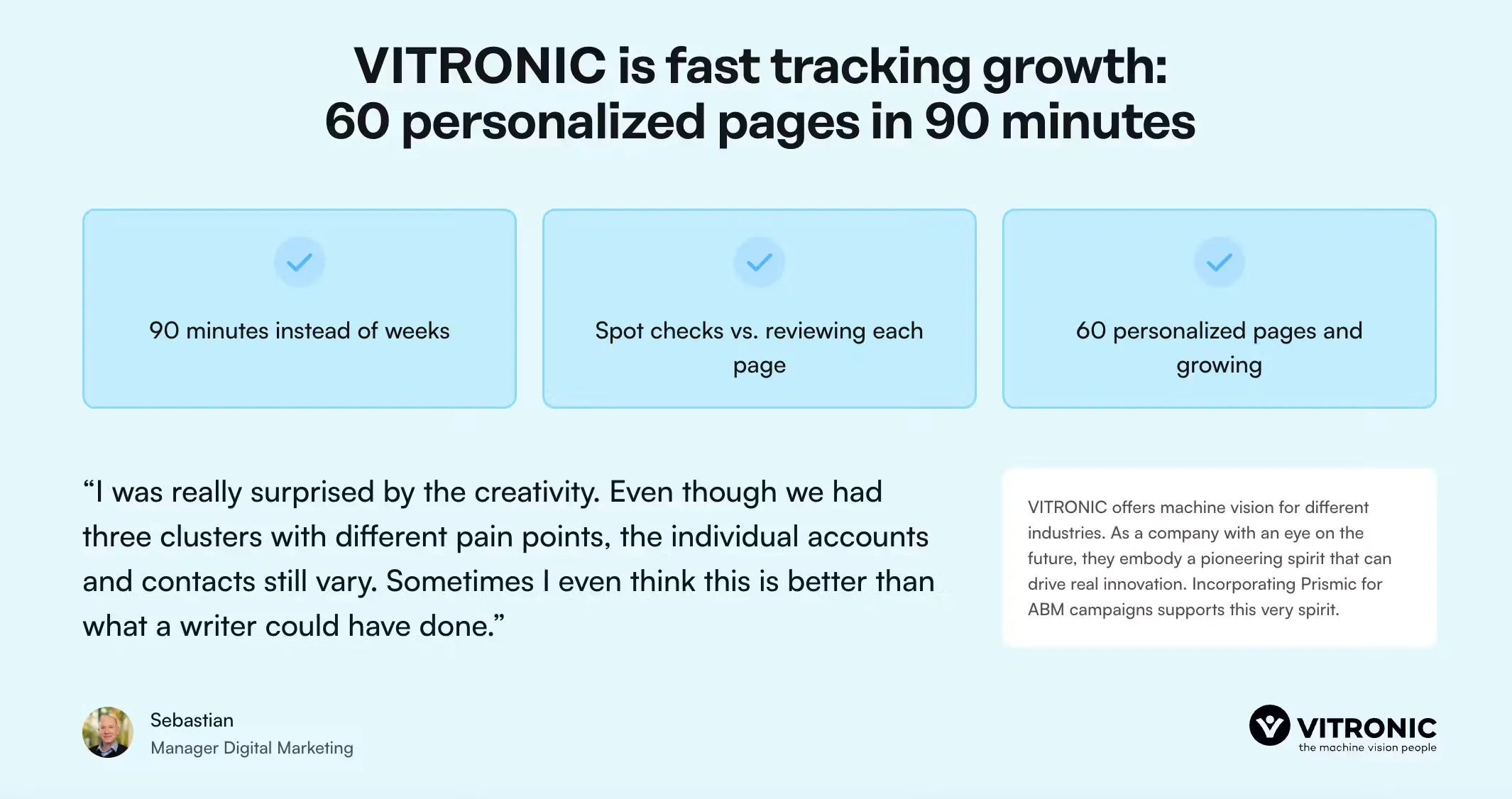
Generating 60 pages is the easy part. Reviewing 60 pages one by one is not. Make sure your CMS lets you review variants in batches, make bulk edits where needed, and approve everything in one pass before pages go live.
5. Give every page its own URL
This one is non-negotiable. If you're sending an account to the same URL as everyone else, you can't measure their engagement separately. Every account variant needs its own traceable URL from day one. That's what makes attribution possible and how you know which accounts are actually paying attention before they ever talk to sales.
6. Use every campaign to improve the next one
Once pages are live, track engagement metrics like time on page, CTA clicks, and return visits at the account level, and feed that data back into your next campaign. The teams that get the most out of ABM personalization are the ones that use each campaign to improve the next.
Scale ABM and content personalization with Prismic
In this guide, we've looked at six headless CMS platforms that help with personalization, and the “right” one depends on your needs and workflows, as they all have different approaches and features.
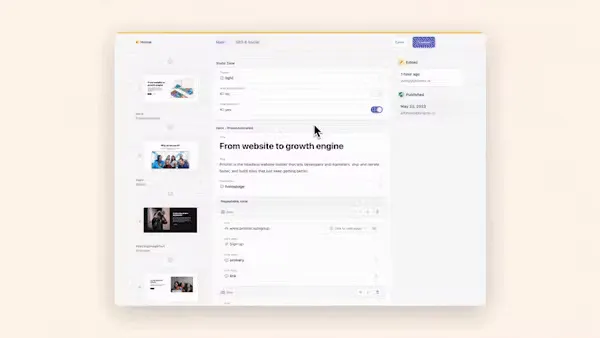
If you’re running ABM campaigns and need to ship account-personalized pages at speed, explore Prismic's ABM landing page builder or get started for free and see how the Page Builder works.
For teams that want a guided walkthrough, book a demo with the Prismic team.