From token swaps to true personalization
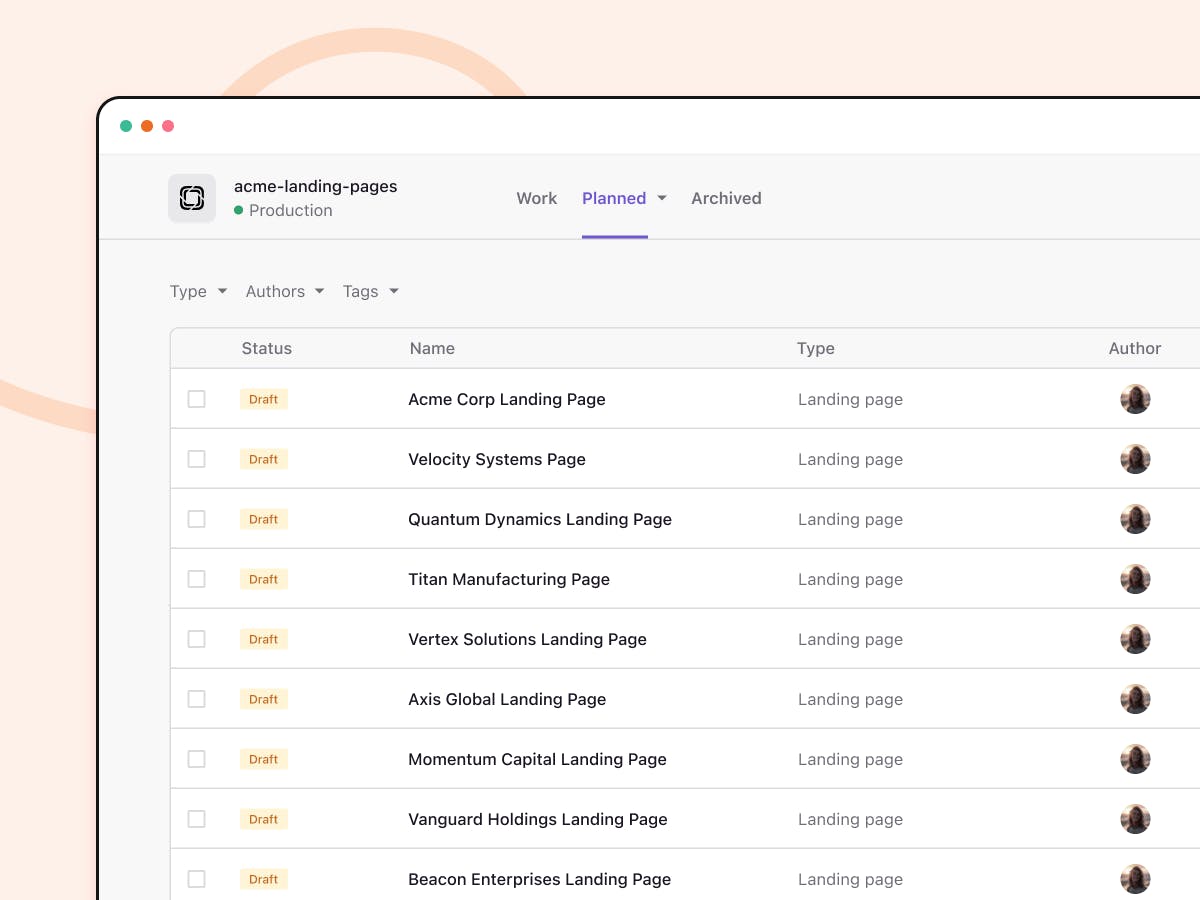
ABM programs are only as effective as the landing pages they send prospects to. You can get the targeting right, build a strong outreach sequence, and warm up an account over time, but a generic destination page can quickly slow progress.
HubSpot and Prismic both support B2B teams building ABM landing pages, but they do so in very different ways. This comparison looks at how each platform approaches page generation, personalization depth, workflows, and integrations to help you decide which one aligns with your ABM strategy.
How Prismic and HubSpot approach ABM differently
Prismic and HubSpot address different needs within an ABM stack. HubSpot is an all-in-one marketing automation platform with ABM capabilities built into its CRM. It supports target account identification, email sequences, ad targeting, and reporting in a single system. Prismic, by contrast, is a dedicated ABM landing page builder focused on generating personalized landing pages at scale. In practice, the two tools often complement each other rather than compete directly.
This architectural difference shapes everything else. HubSpot treats landing pages as one feature among many in a broader marketing suite. Prismic treats ABM landing pages as the core product, built for one specific workflow: turning account data into hundreds of tailored page variations quickly.
Prismic ABM vs. HubSpot ABM
| Prismic ABM landing page builder | HubSpot page building | |
Architecture | Dedicated ABM landing page builder | ABM tools within CRM/marketing suite |
Primary strength | Bulk personalized page generation | Unified marketing automation |
Personalization model | Data-driven narrative adaptation | Smart content and tokens |
Developer dependency | Marketing-only tool (initial set up included) | Requires CMS Hub setup |
Level of personalization | In-depth for each page | Manual copy and paste |
Key ABM landing page features compared
Here's how each platform handles the features that matter most for ABM landing page programs.
Page generation and scale
HubSpot uses a template-based approach where you create pages individually or clone them one by one. If you're targeting 50 accounts, you're essentially building 50 separate pages through manual work or smart content rules.
Prismic works differently. You create one base page, upload your account data, and the system generates all your personalized variations in a single batch. The difference isn't just speed; it's a fundamentally different workflow that changes what's realistic for a small team to accomplish.
Personalization depth and data usage
There's a meaningful gap between token swapping and narrative adaptation. Token swapping inserts a company name or industry into a template, something like “Welcome, Acme Corp.” Narrative adaptation changes the entire story: different pain points, different use cases, different proof points based on what matters to that specific account.
HubSpot's personalization pulls from its own CRM data and works well for known contacts. Prismic accepts CSV uploads containing data from any source, your CRM, enrichment tools like Clay or Clearbit, or custom firmographic data, and uses that information to adapt the full narrative of each page.
Brand control across variations
When you're generating dozens or hundreds of pages, brand consistency becomes a real concern.
- HubSpot's approach: Brand kits and style settings applied to templates keep things consistent, though each cloned page can drift if editors make changes.
- Prismic's approach: A blueprint system where your single base page acts as the source of truth. Every generated variation inherits the same design, voice, and structure automatically.
Review and approval workflows
The QA process reflects the generation method. In HubSpot, you typically review each cloned page individually before publishing. This works fine for smaller account lists but becomes a bottleneck at scale.
Prismic delivers all generated pages as organized batches of drafts. Your team can spot-check a sample for quality, make any needed refinements, and publish the entire batch. VITRONIC, for example, launched 60 personalized pages in about 90 minutes and found the quality consistent enough that they review a handful of pages rather than every single one.
Account-level engagement tracking
HubSpot tracks engagement through its native analytics, tied directly to contact and company records in its CRM. This integration is powerful if you're already running your entire marketing operation in HubSpot.
Prismic tracks engagement through unique, personalized URLs and account-level signals that can be passed to your analytics or CRM platform. This gives you early proof of ABM traction, letting you see which accounts are engaging before anyone fills out a form.
How personalization works in each platform
Personalization is where Prismic and HubSpot diverge most significantly, so it's worth understanding the mechanics of each.
HubSpot smart content and personalization tokens
HubSpot offers two main personalization tools. Smart content lets you create content blocks that change based on viewer attributes, such as list membership, device type, and lifecycle stage. Personalization tokens insert CRM data dynamically, like {{contact.firstname}} or {{company.industry}}.
The setup involves creating rules within the page editor for each element you want to personalize. This approach is flexible but has a key limitation: it requires the contact to already exist in your HubSpot CRM, and the personalization options are constrained by HubSpot's data model.
Prismic data-driven narrative adaptation
Prismic's approach starts with your data, not the platform's data model. You upload a CSV containing whatever account information you have, firmographics, intent signals, enrichment data, and custom fields. The system then generates unique page variations where the entire narrative adapts to each account's context.
Headlines, subheadings, customer logos, use cases, and calls-to-action can all shift based on what's relevant to that specific account. The result feels less like mail merge and more like a page that was actually written for that company.
The ABM landing page workflow
Let's walk through the end-to-end process in each platform so you can visualize the actual work involved.
1. Creating the base page or template
In HubSpot, you start in the drag-and-drop editor, building a landing page template with various modules. In Prismic, you create a single, comprehensive base page using the visual Page Builder that serves as the blueprint for all future variations. You'll set up smart content rules and personalization tokens as you go.
In Prismic, you create a single, comprehensive base page that serves as the blueprint for all future variations. This page locks in your design, messaging structure, and brand voice. The initial setup is more intentional because this one page will generate everything else.
2. Connecting account data and enrichment sources
HubSpot pulls personalization data natively from its own CRM. If your account data lives in HubSpot, this is seamless. If it lives elsewhere, you'll need to sync it first.
Prismic accepts CSV uploads directly. You can pull fields from any CRM, combine them with firmographic data, and layer in enrichment from tools like Clay, Clearbit, or ZoomInfo, all without complex integrations.
3. Generating personalized page variations
Here's where the workflow difference is starkest. In HubSpot, creating variations involves manual cloning and editing of pages, or setting up smart content rules for each element you want to personalize. For 100 accounts, you're looking at significant manual work.
In Prismic, you trigger an automated batch generation process. Upload your CSV, map the fields to your base page, and the system creates all personalized pages in minutes. What used to take weeks of coordination can happen in under two hours.
4. Reviewing and publishing at scale
In HubSpot, each cloned page typically requires individual review before publishing. This is thorough but time-consuming.
Prismic delivers all generated pages as an organized batch of drafts. Your team reviews a sample, makes any needed refinements, and publishes. The quality is consistent enough that spot-checking works, so you are not starting from scratch with each page.
Integrations for ABM tech stacks
Your ABM landing page tool fits into a broader tech stack. Here's how each platform connects.
CRM and sales platform connections
HubSpot's native integration with its own CRM is a major advantage for teams already in that ecosystem. Everything connects automatically, including contacts, companies, deals, and engagement data.
Prismic connects to external CRMs and sales platforms through data exports and imports. You can pull account lists from Salesforce, HubSpot, or other platforms, use that data for page generation, and pass engagement signals back. Prismic also offers API-based integrations, allowing you to connect forms directly so leads and submissions flow back into tools like HubSpot automatically.
Data enrichment tools
Meaningful personalization requires rich data beyond basic firmographics. Both platforms can leverage data from enrichment tools like Clay, Clearbit, and ZoomInfo.
The difference is in how that data flows. HubSpot typically requires enrichment data to sync into its CRM first. Prismic can use enrichment data directly from a CSV, which often means faster time-to-launch for campaigns.
Marketing automation compatibility
HubSpot's marketing automation is self-contained. Email sequences, workflows, and landing pages all live in one platform. This is convenient but can feel limiting if you prefer best-in-class tools for each function.
Prismic is designed to work alongside separate marketing automation tools. You might use Prismic for landing pages, HubSpot or Marketo for email automation, and Salesforce for CRM.
Pricing for ABM landing page programs
Pricing structures differ significantly between Prismic and HubSpot.
- HubSpot: Requires Marketing Hub Professional or Enterprise, plus CMS Hub for full landing page and ABM features. Pricing is tiered and bundled.
- Prismic: Offers dedicated ABM landing page builder pricing separate from its headless CMS product.
The real cost comparison includes the time and resources required for page production. A platform that costs more but lets your team produce 10x the pages with the same headcount might be the better investment.
What B2B marketers say about each platform
Here's what teams using each platform for ABM consistently report.
Speed and time-to-launch
HubSpot users appreciate the unified environment but often note that achieving personalization at scale requires significant manual work. Campaign timelines stretch when each page needs individual attention.
Prismic users consistently highlight rapid deployment. Teams report launching campaigns that would have taken weeks in just hours.
Personalization quality
A common concern with any automated content generation is that it can feel generic. HubSpot addresses this by relying on marketer-written smart content rules, where you control exactly what changes and when.
Prismic generates high-quality first drafts that marketers can then review and refine. The narrative adaptation goes deeper than token swapping, so pages feel genuinely tailored rather than templated.
Marketing team independence
HubSpot CMS requires some initial developer setup, but marketers can then work independently within the page editor.
Prismic's ABM landing page builder also requires initial setup, but because it was designed from the start as a marketing-only tool, that setup is included as part of the solution. Your marketing team can generate, review, and publish pages without filing developer tickets.
When to choose Prismic for ABM landing pages
The right choice depends on your team's specific situation and goals.
Choose Prismic if:
- You want to scale personalized pages across many accounts quickly
- Your marketing team wants to operate independently of developers
- You have enriched account data ready to use for deep personalization
- Speed-to-launch is critical for your ABM programs
Choose HubSpot if:
- You're deeply invested in the HubSpot ecosystem already
- You want unified reporting across all marketing activities in one platform
- You're targeting a smaller number of accounts with manual personalization
Many teams find Prismic and HubSpot work well together, with HubSpot for CRM and marketing automation and Prismic for rapid landing page generation.
Ready to convert accounts in a flash?
Stop guessing. Deliver personalized landing pages for your ABM campaigns. All it takes is a couple of clean data points paired with the click of a button.
