A simpler way to scale personalized ABM landing pages
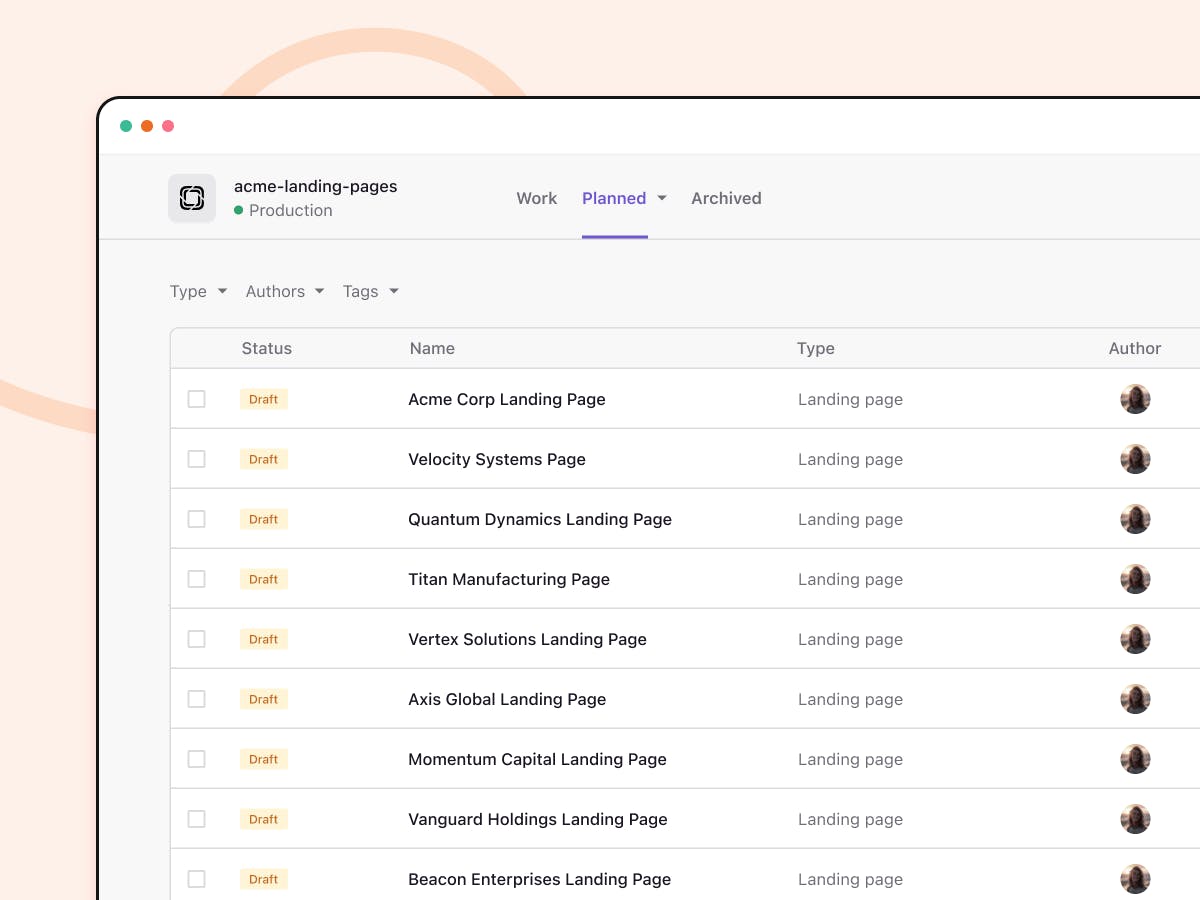
Prismic and Folloze both help B2B teams create personalized ABM landing pages, but they solve different problems. Folloze is a buyer experience platform for orchestrating content across the sales cycle. Prismic offers a marketing-first landing page builder that turns one approved page into hundreds of data-driven variations.
This comparison breaks down how each platform handles page building, personalization, workflows, and scaling so you can figure out which approach fits where your ABM program is actually stuck.
What sets Prismic and Folloze apart for ABM
Prismic and Folloze solve different problems in the B2B marketing stack. Folloze is a buyer experience platform built for orchestrating personalized content across the entire sales cycle. Prismic offers a marketing-first ABM landing page builder, a standalone tool that transforms one approved page into hundreds of data-driven variations using account data you already have.
So which one fits your situation? That depends on where your ABM program is stuck. If you're looking for end-to-end buyer engagement with sales-marketing collaboration features, Folloze covers that ground. If your bottleneck is actually producing personalized landing pages fast enough to keep up with campaigns, Prismic's batch generation approach tackles that specific constraint.
Here's the quick breakdown:
- Prismic: One base page becomes hundreds of tailored variations through batch generation and marketing-controlled review workflows
- Folloze: AI-powered microsite creation with real-time engagement insights and shared content boards for sales and marketing teams
How Prismic approaches ABM landing pages
Prismic's ABM landing page builder works on a straightforward premise. You create one on-brand base page, upload your account data, and generate dozens or hundreds of personalized variations, with no dev tickets or design requests.
The base page locks in your design system, brand voice, and structure. Every variation inherits those constraints automatically. From there, you upload data you already have: company names, industries, roles, firmographics, CRM fields, or enrichment data from tools like Clay.
What happens next goes beyond simple token swapping. The system finds meaningful angles in your data, including industry context, likely pain points, and relevant use cases, and adapts the narrative so each page feels crafted for that specific account. Headlines, framing, proof points, and product emphasis can all shift based on what the data reveals.
Marketing stays in control throughout. Pages arrive as editable drafts organized in batches, so your team can review, refine, and approve before anything goes live. VITRONIC, for example, launched a 60-page personalized ABM campaign in about 90 minutes, work that previously took weeks.
How Folloze approaches ABM landing pages
Folloze positions itself as a buyer experience platform rather than a landing page builder. The focus is on creating dynamic microsites and content boards that adapt to buyer behavior in real time.
Their AI-powered creation tools let teams spin up personalized experiences quickly without coding. You can build content destinations that change based on who’s viewing them, adjusting messaging based on role, buying stage, or behavioral signals.
Where Folloze particularly shines is connecting sales and marketing teams. Shared content boards give both teams visibility into what buyers are engaging with, and real-time notifications alert sales when accounts show interest. The platform integrates with ABM data providers like 6sense and Demandbase, pulling intent signals directly into the experience layer.
Prismic ABM vs. Folloze ABM
| Prismic ABM landing page builder | Folloze page building | |
Page building | Component-based, single base page model | AI-powered microsite builder |
Data sources | CSV upload, CRM, enrichment tools | CRM integrations, intent data platforms |
Personalization | Narrative-level customization | Dynamic content personalization |
Workflow | Batch draft review, marketing approval | Collaborative sales-marketing boards |
Analytics | Account-level signals via external analytics tools | Built-in engagement dashboards |
ABM landing page features compared
Page building and design control
Prismic uses a locked base page approach. You define the structure and brand standards once, then generate variations that inherit those constraints. This prevents brand drift even when creating hundreds of pages.
Folloze offers drag-and-drop microsite building with more flexibility in how individual experiences are constructed. The trade-off is that maintaining consistency across many experiences requires more governance setup.
Data integration and personalization sources
Both platforms can ingest account data, though they pull from different sources. Prismic accepts CSV uploads with firmographics, CRM fields, and enrichment data from tools like Clay. Folloze connects directly to intent data platforms like 6sense and Demandbase, plus CRM systems and behavioral signals from buyer interactions.
Workflow and collaboration tools
Prismic delivers editable drafts in organized batches. Marketing reviews and approves before publishing, with no handoffs to dev or waiting in ticket queues.
Folloze emphasizes real-time collaboration between sales and marketing through shared content boards. Sales can see what marketing has created, and both teams get visibility into buyer engagement.
Tracking and account-level analytics
Prismic addresses early ROI proof with personalized URLs and account-level engagement signals. You can measure traction before revenue materializes.
Folloze provides real-time engagement insights during buyer interactions, which is useful for sales teams who want to know exactly when and how accounts are engaging with content.
Platform architecture and performance
Prismic is built on headless CMS architecture. "Headless" means the backend (where content lives) is separate from the frontend (what visitors see), allowing for faster load times and more flexibility.
Folloze is a SaaS platform focused specifically on buyer engagement experiences, purpose-built for dynamic content delivery rather than general content management.
How personalization works in each platform
Personalization quality can make or break ABM campaigns. Buyers spot generic messaging instantly, so the depth of personalization matters more than most teams realize.
Surface-level personalization vs narrative customization
Surface-level personalization means simple token swapping: "Welcome, {{Company Name}}" or "Solutions for {{Industry}}." It's better than nothing, but it often feels hollow to recipients.
Narrative customization goes deeper. Headlines, framing, use cases, proof points, and product emphasis shift based on what the data reveals about each account. The page tells a different story depending on whether you're targeting a fintech company worried about compliance or a healthcare organization focused on patient outcomes.
How each platform uses account data
Prismic's approach looks for meaningful angles inside your data. Industry context might surface specific pain points. Role information might shift which benefits get emphasized. The goal is making each page feel like it was written for that account, not just addressed to them.
Folloze uses behavioral signals and intent data to dynamically adapt content. As buyers interact with experiences, the content can shift based on what they're engaging with.
Quality control when generating pages at scale
Prismic's batch review workflow lets marketing teams spot-check or review all pages before publishing. You maintain final approval over everything that goes live.
Folloze relies on template controls and content governance settings to maintain quality across dynamic experiences.
Pricing and value for ABM teams
Both platforms have different pricing structures, and current details are available directly from each vendor. However, the value calculation depends on a few key factors:
- Cost per page at scale: How do economics change when targeting 10 accounts versus 1,000?
- Resource savings: What's the cost of design and development support currently going toward ABM pages?
- Time-to-value: How quickly can you launch campaigns when buying windows are short?
Scaling ABM landing pages from ten accounts to thousands
Scalability is where many ABM programs stall. What works for a pilot with 10 accounts often breaks down when you try to expand.
Time from data to live page
Prismic enables generating dozens or hundreds of variations from one base page in a single workflow. VITRONIC's 60-page campaign in 90 minutes illustrates what's possible when the bottleneck shifts from production to review.
Folloze emphasizes spinning up microsites in minutes through AI-powered creation, though the workflow is oriented more toward individual experience creation than batch generation.
Maintaining brand consistency at volume
Brand drift becomes a real risk when creating many personalized pages. Prismic addresses this by locking brand voice and design into the base page, and variations inherit those constraints automatically. Folloze uses template controls and content governance settings to enforce rules across experiences.
Scale your ABM landing pages
Prismic's ABM landing page builder turns one approved page into hundreds of personalized variations, so your campaigns land on time and convert more target accounts.

How Prismic and Folloze rank among top ABM platforms
ABM platforms generally fall into categories: data and intent providers, orchestration platforms, execution tools, and analytics solutions.
Folloze sits in the buyer engagement and orchestration category, designed to manage experiences across the buyer's journey with deep integrations into intent data providers.
Prismic's ABM landing page builder is an execution tool, specifically focused on the landing page production bottleneck. It is not trying to be an orchestration platform; it solves the specific problem of getting personalized pages live quickly.
When evaluating account based marketing vendors, the question is not which platform is “better” but which addresses your actual constraint.
What to look for in account based marketing vendors
When evaluating top ABM platforms for landing page creation, a few capabilities matter most.
Marketer autonomy and no-code workflows
Marketing teams that depend on dev resources for every page change will always move slower than campaigns demand. Both Prismic and Folloze offer no-code creation, though with different approaches.
Personalization depth beyond token swapping
If all a vendor can demonstrate is inserting company names into templates, that's a red flag. Look for platforms that adapt messaging based on industry, pain points, and use cases.
Brand control and consistency
Hundreds of personalized pages mean hundreds of opportunities for brand drift. Locked templates and component systems prevent inconsistency from creeping in.
Integration with your existing martech stack
Consider what data sources you connect, such as CRM systems, enrichment tools, and analytics platforms. Prismic accepts CSV uploads and integrates with enrichment tools like Clay. Folloze connects directly to intent data platforms and CRMs.
Tracking and attribution capabilities
Account-level engagement signals help prove ABM ROI before revenue materializes. Personalized URLs make it possible to track which accounts are engaging and how.
When to choose Prismic or Folloze for ABM
Choose Prismic if
- You want to generate many landing page variations from existing account data
- Your team prefers batch review workflows with marketing as final approver
- You value narrative-level personalization over simple token swapping
- Production bottlenecks, not orchestration, are slowing your ABM program.
Choose Folloze if
- You want AI-powered microsite creation with drag-and-drop building
- Sales-marketing collaboration on content boards is a priority
- You want real-time engagement insights during buyer interactions
- You're building interactive content experiences beyond landing pages
Build ABM landing pages that convert at scale
The right choice between Prismic and Folloze depends on where your ABM program is stuck. If the bottleneck is producing personalized pages fast enough, Prismic's batch generation approach addresses that constraint. If you want broader buyer engagement orchestration with sales-marketing alignment, Folloze's platform covers more ground.
Ready to convert accounts in a flash?
Stop guessing. Deliver personalized landing pages for your ABM campaigns. All it takes is a couple of clean data points paired with the click of a button.
