
TL;DR: Best ABM Platforms by Category (2026)
- All-in-one ABM (Demandbase, 6sense, ZoomInfo): Best for big, mature teams that want everything in one suite; expensive + slower to roll out.
- Intent data (Bombora): Best for “who’s in-market?” signals; needs other tools to execute campaigns.
- ABM ads (Terminus, RollWorks, Madison Logic, Influ2, Metadata): Best for targeting accounts with paid reach; landing pages + attribution often handled elsewhere.
- Web/landing personalization (Prismic, Mutiny, Intellimize): Best for converting clicks—where most ABM stalls; Prismic = scalable 1:1 landing pages, Mutiny = on-site personalization.
- Marketing automation w/ ABM (HubSpot, Marketo): Best if you’re already in the ecosystem; ABM features are solid but not as deep as ABM-native platforms.
Account-based marketing has evolved from a specialized tactic to a core go-to-market strategy for B2B teams targeting high-value accounts. The platform landscape in 2026 looks different than even two years ago. Intent data is now table stakes, AI recommendations are everywhere, and the real differentiator is often execution speed rather than feature lists.
This guide breaks down the top ABM platforms by category, explains how to evaluate them based on your team's maturity and tech stack, and covers the often-overlooked landing page layer where most ABM programs lose momentum.
How We Evaluated the Best ABM Platforms
Here's what we looked for when comparing ABM software for B2B teams. Enterprise deals bring complexity that smaller accounts don't: longer sales cycles, bigger buying committees, and higher expectations for relevance at every touchpoint.
Data Quality and Enrichment Capabilities
Accurate firmographic, technographic, and intent data form the foundation of any ABM program. Without reliable data, even the best orchestration tools fall flat. We looked at how each platform sources its data, how often it refreshes, and how well it integrates with enrichment tools.
Multi-Channel Orchestration
Enterprise deals rarely close from a single touchpoint. The best ABM platforms coordinate account-based advertising, email sequences, web personalization, and sales outreach from one place. We evaluated how seamlessly each tool manages campaigns across channels.
Sales and Marketing Alignment Features
ABM only works when sales and marketing share the same account lists, see the same engagement signals, and agree on handoff criteria. We looked for shared dashboards, account scoring, and automated alerts that keep both teams working from the same playbook.
Measurement and ROI Attribution
Proving ABM impact is notoriously difficult because enterprise deals involve many touches over long periods. We prioritized platforms with account-level analytics, pipeline influence tracking, and attribution models that connect marketing activity to revenue.
Implementation Speed and Support
Enterprise software often takes months to deploy. We considered onboarding complexity, time-to-value, and vendor support quality. A powerful platform that takes six months to implement may not fit teams under pressure to show results quickly.
Best All-in-One ABM Platforms
All-in-one platforms bundle intent data, advertising, personalization, and analytics into a single solution. They work best for mature ABM programs that want to consolidate tools and reduce integration complexity.
1. Demandbase One
Best for: Enterprise teams wanting unified sales and marketing intelligence
Pricing: Enterprise (custom quotes, typically $50,000-$250,000+ annually)
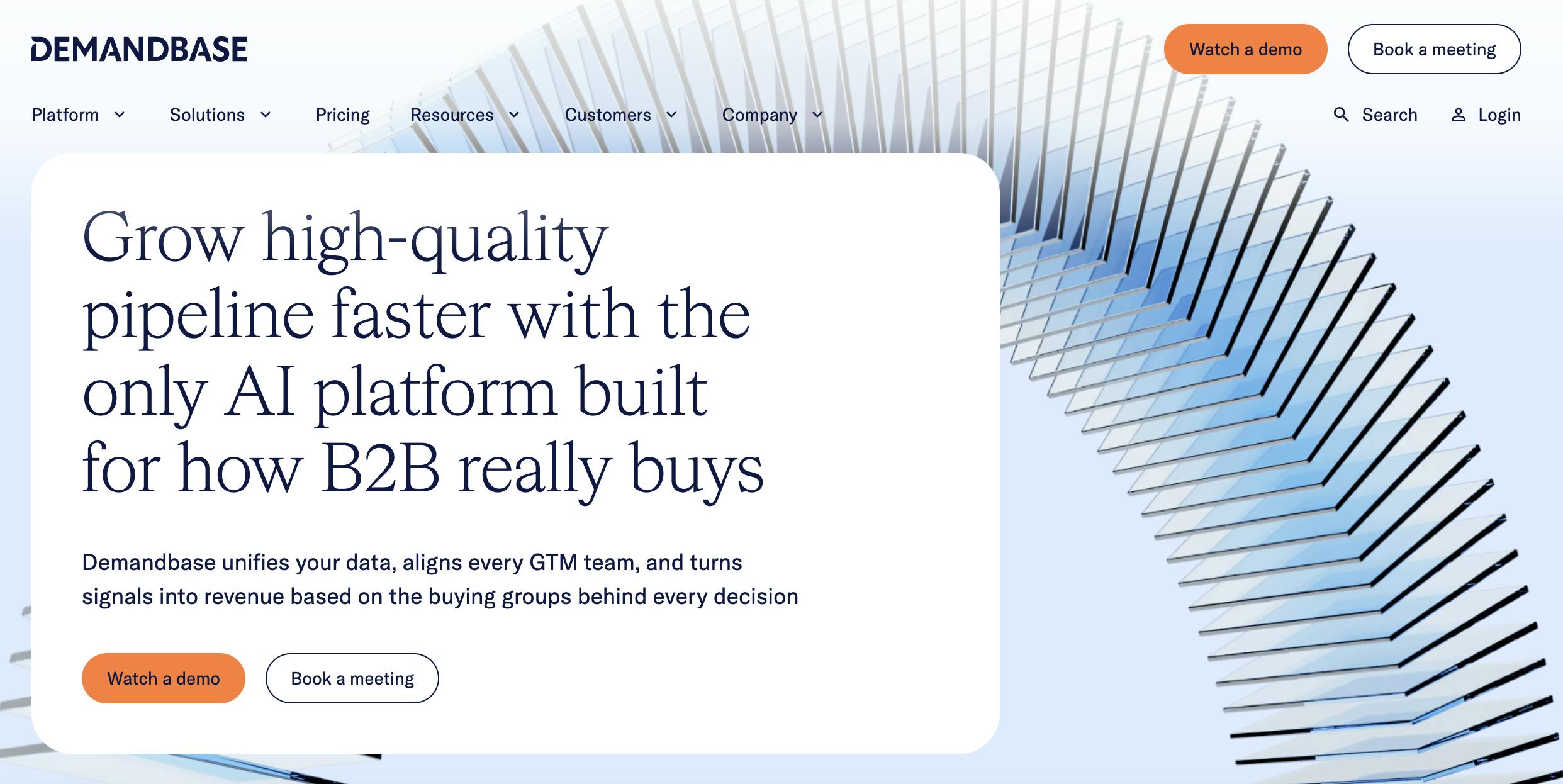
Demandbase One combines advertising, intent data, and sales intelligence into a single platform. The product brings together Account Intelligence, which provides a shared, enhanced view of every opportunity, with multi-channel orchestration capabilities.
Key Features
- Unified account view: Marketing and sales teams see the same account engagement data in one place
- Native B2B advertising platform: The only B2B DSP optimized to reach whole buying teams
- Web personalization: Tailor site experiences based on account and visitor attributes
- Real-time intent monitoring: Track when target accounts actively research solutions
- Salesforce integration: Deep native integration with custom tags, fields, and dashboard views
- Account scoring: Intuitive scoring features for both accounts and leads
Who It's For
Demandbase works best for enterprises with complex, high-ticket deals requiring strong sales-marketing alignment and multi-channel ABM capabilities. Teams need dedicated ABM operations resources to maximize the platform's value.
Limitations
- Steep learning curve: The platform's breadth means longer onboarding time
- Setup complexity: Implementation can be tedious without a large operations team
- Manual ad serving: Some users report that ad campaigns require providing assets to Demandbase's team rather than self-service campaign management
- High cost: Premium pricing that may be prohibitive for mid-market companies
- Reporting challenges: Some users find the reporting platform difficult to use for custom data analysis
Ready to launch personalized ABM landing pages in minutes?
Prismic's ABM landing page builder turns one approved page into hundreds of tailored variations using the data you already have.
2. 6sense Revenue AI
Best for: Intent-driven targeting and predictive analytics
Pricing: Enterprise (custom quotes, typically $60,000-$120,000+ annually for first year with 2-year commitment)
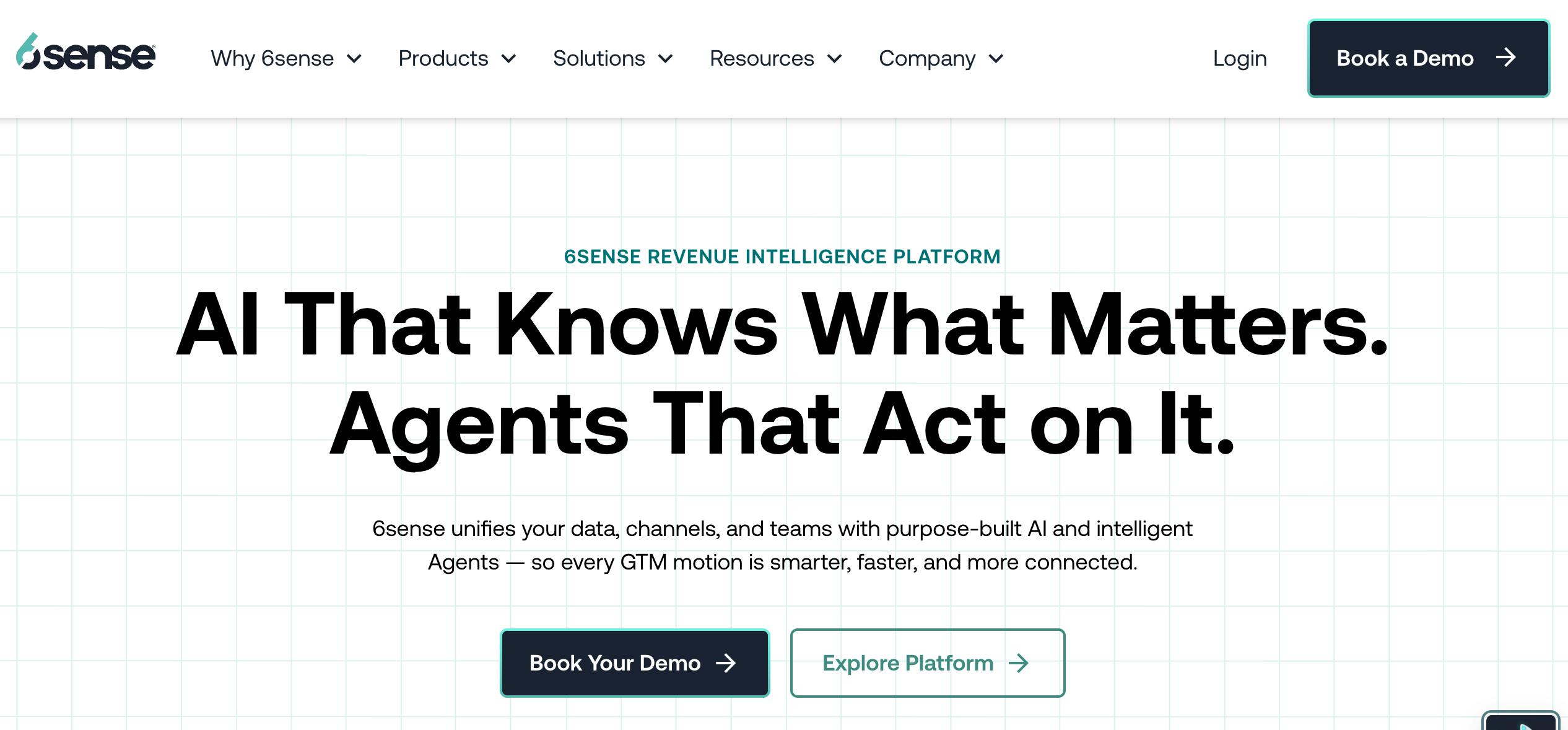
6sense has built its reputation on predictive analytics and intent data. The platform analyzes over one trillion pieces of B2B data daily through its Signalverse technology to identify accounts showing buying signals before they fill out a form.
Key Features
- Predictive analytics: AI-powered 6AI models that predict which accounts are ready to buy and when
- Intent data at scale: Captures and analyzes buyer intent signals across the web
- Intelligent Workflows Engine: Drag-and-drop canvas that turns AI signals into automated omni-channel plays
- Sales Copilot: Provides reps with prioritized accounts, ready buyers, and automated research within their workflow
- Multi-channel orchestration: Coordinate campaigns across ads, email, web, and sales from one platform
- Deep CRM integration: Shows intent data and buying stages directly in Salesforce
Who It's For
6sense works well for organizations with long sales cycles and multi-stakeholder buying processes. The platform delivers the most value when you have enough historical data to train its predictive models effectively.
Limitations
- High cost: Premium enterprise pricing with significant year-over-year increases reported by some customers
- Implementation time: Salesforce integration can take three months to get fully operational
- Credit-based system: Limited credits on lower tiers may not support prospecting needs
- Data accuracy concerns: Some users report discrepancies between 6sense results and other platforms
- Learning curve: Internal terminology and platform-specific concepts take time to understand
3. ZoomInfo MarketingOS
Best for: Data-first teams needing comprehensive contact and company intelligence
Pricing: Mid-market to Enterprise ($15,000-$40,000+ annually)
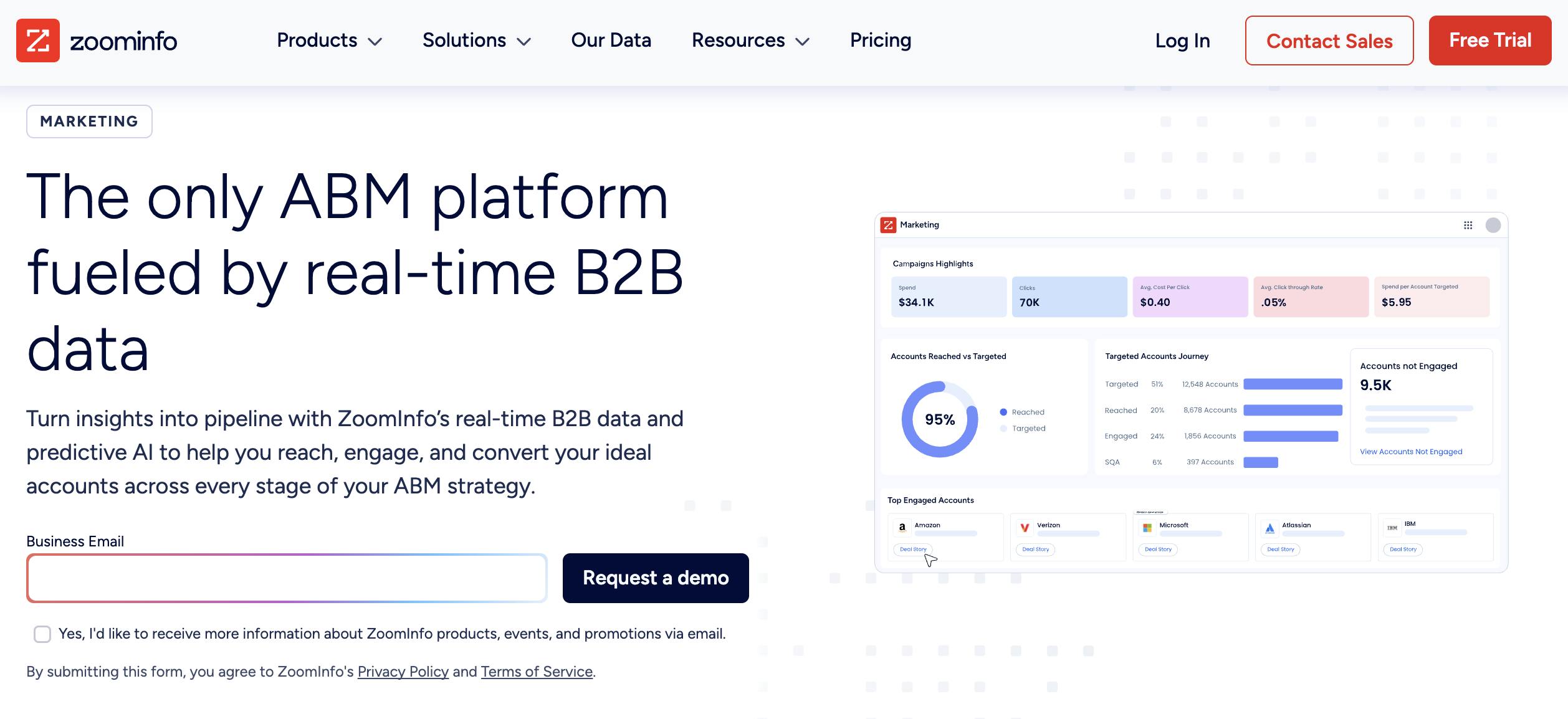
ZoomInfo's strength is data. The platform maintains contact and company information on 321 million active professionals at 104 million companies. MarketingOS layers account-based marketing capabilities on top of this extensive database.
Key Features
- Comprehensive B2B database: Extensive contact and company data with advanced search filters
- Buyer intent insights: In-market predictive scoring to identify accounts ready to buy
- Cross-channel advertising: Run display and social advertising campaigns through native DSP
- Form enrichment: Automatically shorten web forms and enrich submissions with ZoomInfo data
- Website visitor tracking: Convert IP addresses into buyer profiles
- Website chat: Built-in chatbot to convert visitors and track on-page behavior
- CRM integration: Native integrations with Salesforce, HubSpot, Marketo, and other platforms
Who It's For
ZoomInfo MarketingOS makes sense for teams where ABM strategy depends on accurate, comprehensive data as the foundation. The platform feels most natural for teams that started with ZoomInfo for sales prospecting and want to extend into marketing use cases.
Limitations
- High cost: Starting around $15,000 annually with limited credits, costs can quickly escalate
- Credit management complexity: Every action consumes credits, requiring careful usage monitoring
- North America focus: Limited contact coverage outside North America
- Learning curve: Depth of features requires training to use effectively
- User limitations: Additional users add $1,500-$2,500 per year depending on plan tier
Best Intent Data and Account Identification Platforms
Intent data platforms focus specifically on identifying accounts showing buying signals. These tools answer "who's in-market right now?" and typically feed data into other systems for execution.
1. Bombora
Best for: Third-party intent data to identify in-market accounts
Bombora specializes in B2B intent data, tracking content consumption across thousands of business websites to identify accounts actively researching specific topics. Many ABM platforms (including Terminus and 6sense) integrate Bombora data as an add-on or included feature.
Key Features
- Company Surge data: Identifies accounts showing increased research activity around specific topics
- Topic taxonomy: Tracks intent across thousands of business topics and keywords
- Multi-source data: Aggregates intent signals from B2B publisher network
- Integration flexibility: Feeds intent data into existing ABM, CRM, and marketing automation platforms
Who It's For
Teams that want to add intent layer to their existing tech stack without replacing current tools. Works well alongside account-based advertising platforms that need targeting intelligence.
Limitations
- Requires other tools: Intent data alone doesn't execute campaigns, needs integration with ad platforms or marketing automation
- Topic configuration: Requires careful selection of keywords and topics to track effectively
- Additional cost: Often comes as add-on to existing ABM platforms at extra expense
Best Account-Based Advertising Platforms
These platforms specialize in programmatic display ads targeted to account lists. They excel at awareness campaigns and retargeting, though they typically connect with other systems for full measurement.
1. Terminus (now Demandscience)
Best for: Multi-channel campaign orchestration with strong advertising capabilities
Pricing: Mid-market to Enterprise ($20,000-$150,000+ annually, median around $23,000)
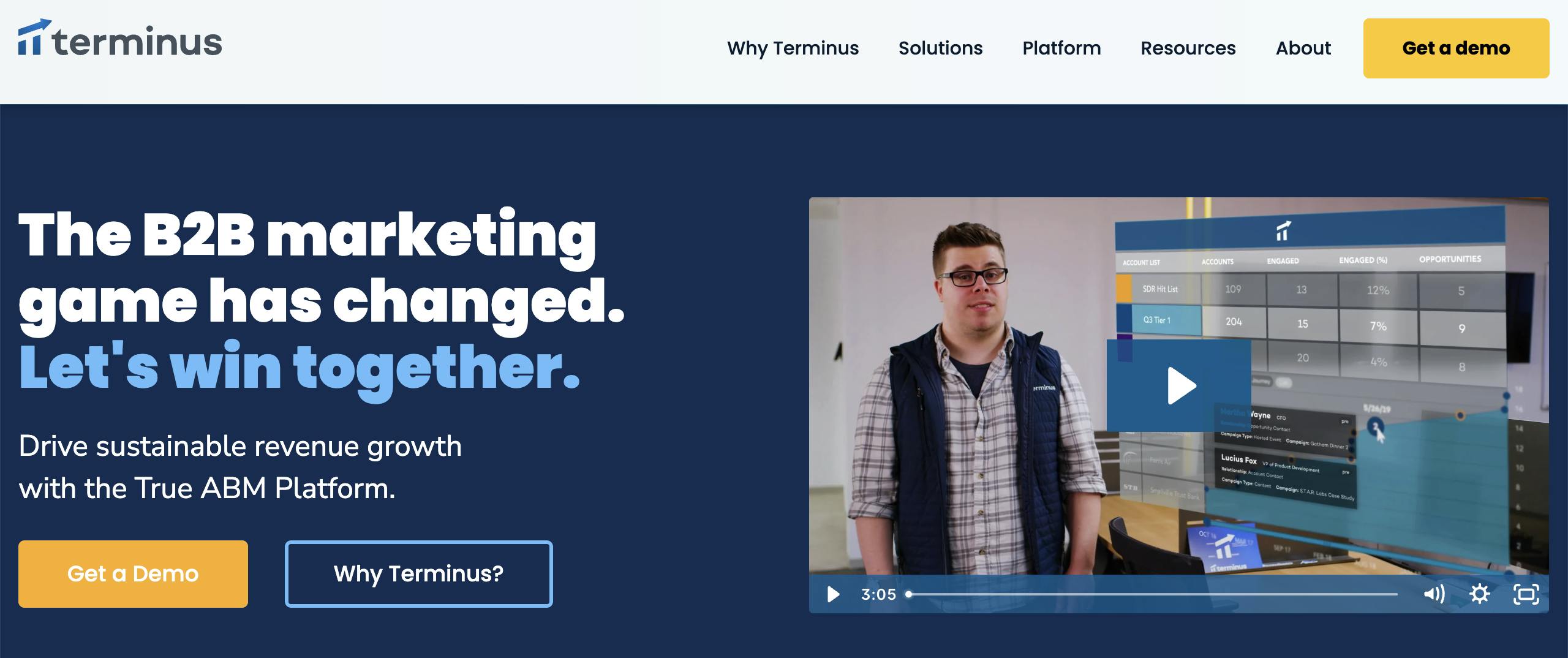
Terminus focuses on multi-channel orchestration with particular strength in display advertising, LinkedIn sponsored content, and account-based chat. The platform has grown through acquisitions to offer a comprehensive ABM suite.
Key Features
- Account Hub: Unified database with first and third-party data providing 360-degree view of contacts and accounts
- Multi-channel advertising: Display ads, connected TV, LinkedIn sponsored content from one platform
- Bombora intent data: Quality, relevant intent signals integrated natively
- Account identification and scoring: Identify and score unknown website visitors
- Sales insights: Alert sales teams to anonymous web traffic and surging engagement accounts
- Measurement Studio: Track campaign performance from market-level reports to board-level dashboards
Who It's For
Mid-market and enterprise teams that want to surround target accounts across multiple touchpoints without managing separate tools for each channel. The platform offers good balance of capabilities and ease of use.
Limitations
- Cost structure: Advertising costs come on top of base platform fee
- Salesforce dependency: Platform relies heavily on what exists in Salesforce, limiting ability to market outside CRM
- Campaign setup: Some users find creating new campaigns less intuitive than desired
- Multiple acquisitions: Platform combines multiple acquired products, leading to occasional UI inconsistencies
- Ad budget required: Need significant advertising investment to gather enough data and see influence
2. Rollworks
Best for: Mid-market teams using HubSpot or Salesforce
Pricing: Mid-market ($1,000-$2,000+ per month)
RollWorks offers accessible ABM for teams already using Salesforce or HubSpot. The native CRM integrations mean less setup time and cleaner data flow compared to platforms requiring extensive integration work.
Key Features
- Native CRM integration: Deep HubSpot and Salesforce integration out of the box
- Account-based advertising: Programmatic display ads targeted to account lists
- Multi-channel engagement: Coordinate display, social, and email from one platform
- Account identification: Identify companies visiting your website
- Straightforward setup: Faster implementation than enterprise-focused alternatives
Who It's For
Mid-market companies scaling their ABM programs who want tight CRM integration without enterprise complexity. Good fit for teams without dedicated ABM operations resources.
Limitations
- Less sophisticated: ABM capabilities not as advanced as enterprise-focused platforms like Demandbase or 6sense
- Smaller data set: Contact and intent data less comprehensive than ZoomInfo or 6sense
- Limited customization: Fewer advanced features for complex ABM programs
3. Madison Logic
Best for: Global content syndication and B2B media reach
Pricing: Enterprise (custom quotes)
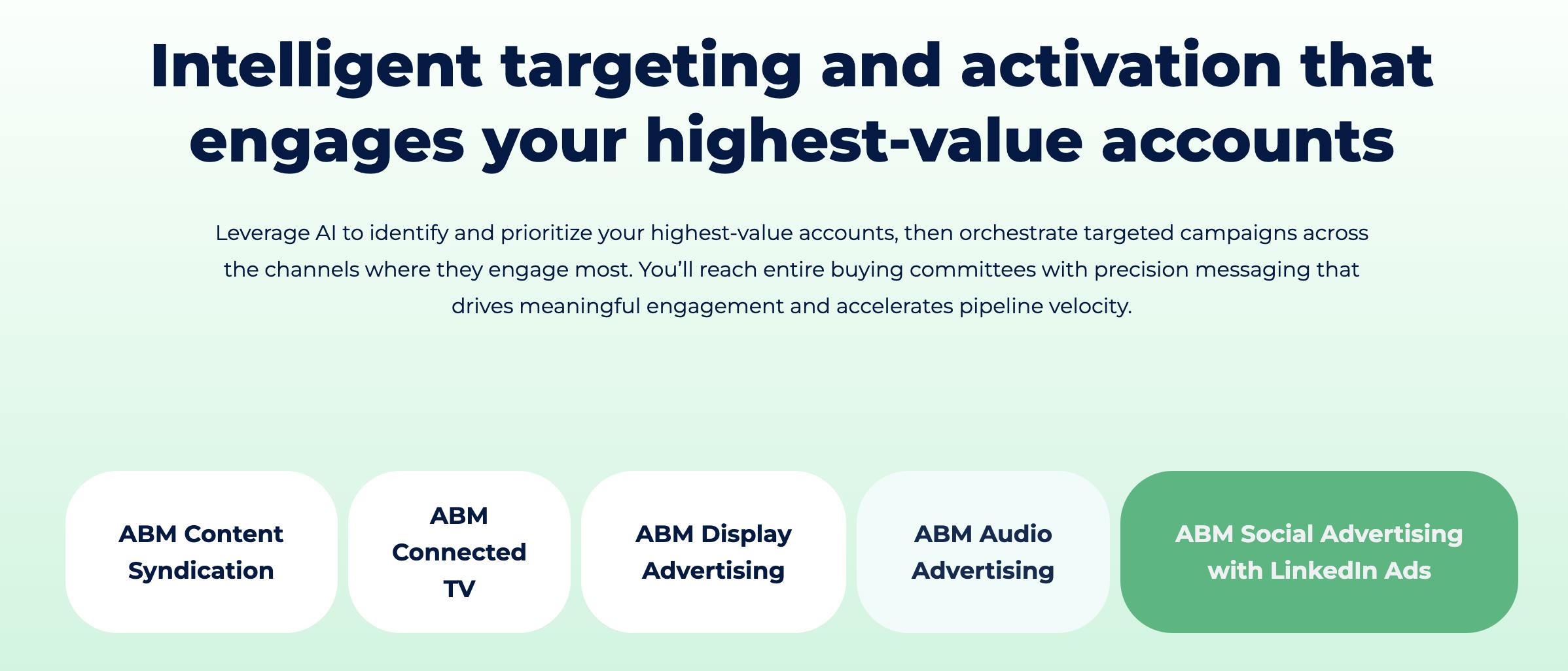
Madison Logic specializes in B2B content syndication across a global publisher network. The platform provides reach that's difficult to replicate with advertising alone, particularly for top-of-funnel awareness campaigns.
Key Features
- Global B2B media network: Extensive publisher relationships for content distribution
- Content syndication: Distribute whitepapers, reports, and other content to target accounts
- International reach: Strong coverage in UK, EU, and global markets
- GDPR compliance: Built for international data privacy requirements
- Account-level reporting: Track which accounts engage with syndicated content
Who It's For
Enterprise teams running international ABM campaigns who need top-of-funnel awareness through content syndication. Particularly valuable for companies targeting European markets.
Limitations
- Top-of-funnel focus: Best for awareness and lead generation rather than late-stage conversion
- Content requirements: Requires quality content assets for syndication
- Limited control: Less control over exact placement compared to direct advertising
4. Influ2
Best for: Person-based advertising targeting specific decision-makers
Pricing: Mid-market to Enterprise (custom quotes)
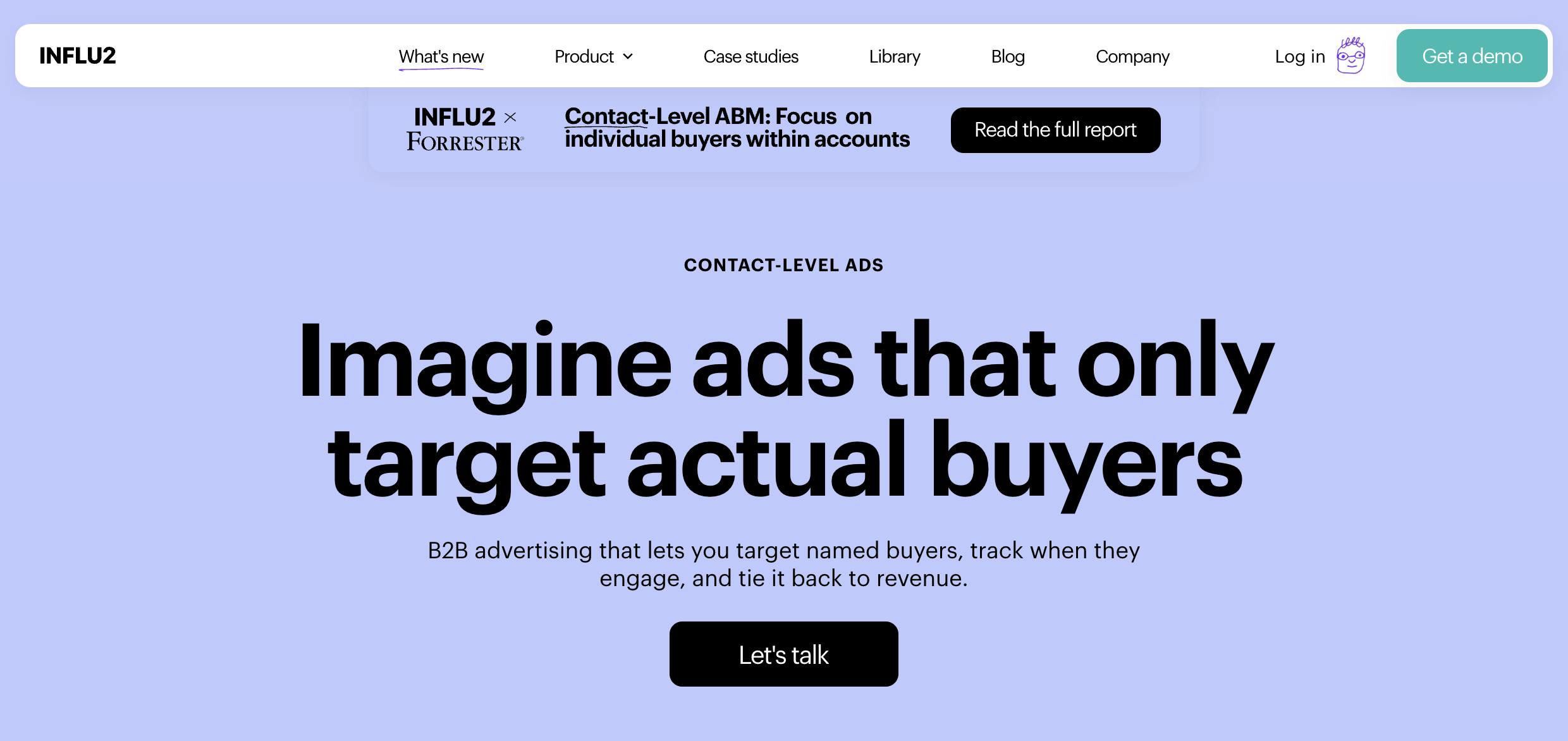
Influ2 takes a different approach from traditional ABM advertising. Instead of targeting companies, it targets specific decision-makers within those companies with person-level precision.
Key Features
- Person-based advertising: Target specific individuals rather than just companies
- Decision-maker precision: Reach exact members of buying committees
- Ad engagement tracking: See which individuals within accounts engage with ads
- Multi-channel delivery: Serve ads across display, social, and other channels
Who It's For
Teams that know exactly which individuals they're trying to reach within buying committees. Works well when you have accurate contact data and need to reach specific stakeholders.
Limitations
- Data dependency: Requires accurate contact-level data to work effectively
- Narrower reach: More limited scale than company-level targeting
- Higher CPM: Person-level targeting typically costs more than company-level
5. Metadata.io
Best for: Automated paid campaign management
Pricing: Mid-market (custom quotes)
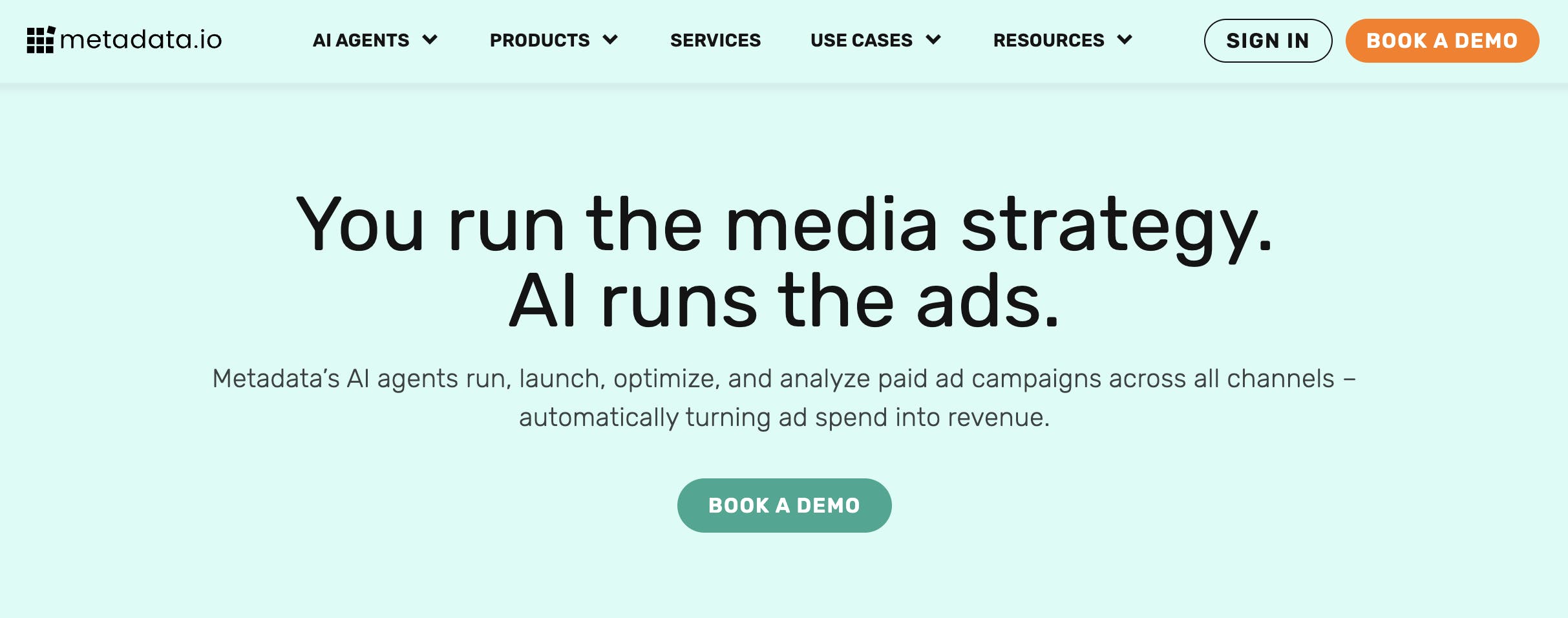
Metadata automates paid media campaigns across LinkedIn, Facebook, and display networks. The platform's AI optimizes ad spend in real time, helping teams maximize budget efficiency.
Key Features
- Automated audience building: AI creates and refines audiences based on performance
- Cross-channel optimization: Manage campaigns across LinkedIn, Facebook, and display from one place
- Real-time optimization: AI adjusts spend allocation automatically
- Reduced operational burden: Eliminates manual audience segmentation and campaign management
Who It's For
Teams running significant paid advertising budgets who want automation to reduce manual campaign management work. Best for companies comfortable letting AI make optimization decisions.
Limitations
- Limited to paid ads: Focused primarily on paid advertising channels
- Less control: Automation means less granular control over campaign decisions
- Learning period: AI needs time and data to optimize effectively
Best Web Personalization and ABM Landing Page Platforms
Web personalization tools tailor website and landing page experiences for target accounts. This category is where ABM execution often breaks down. Teams invest in intent data and advertising, but the destination landing page feels generic.
1. Prismic ABM Landing Page Builder
Best for: Generating personalized landing pages at scale using existing data
Pricing: Mid-market to Enterprise (~$12,000-$25,000+ per year, varies by account volume)
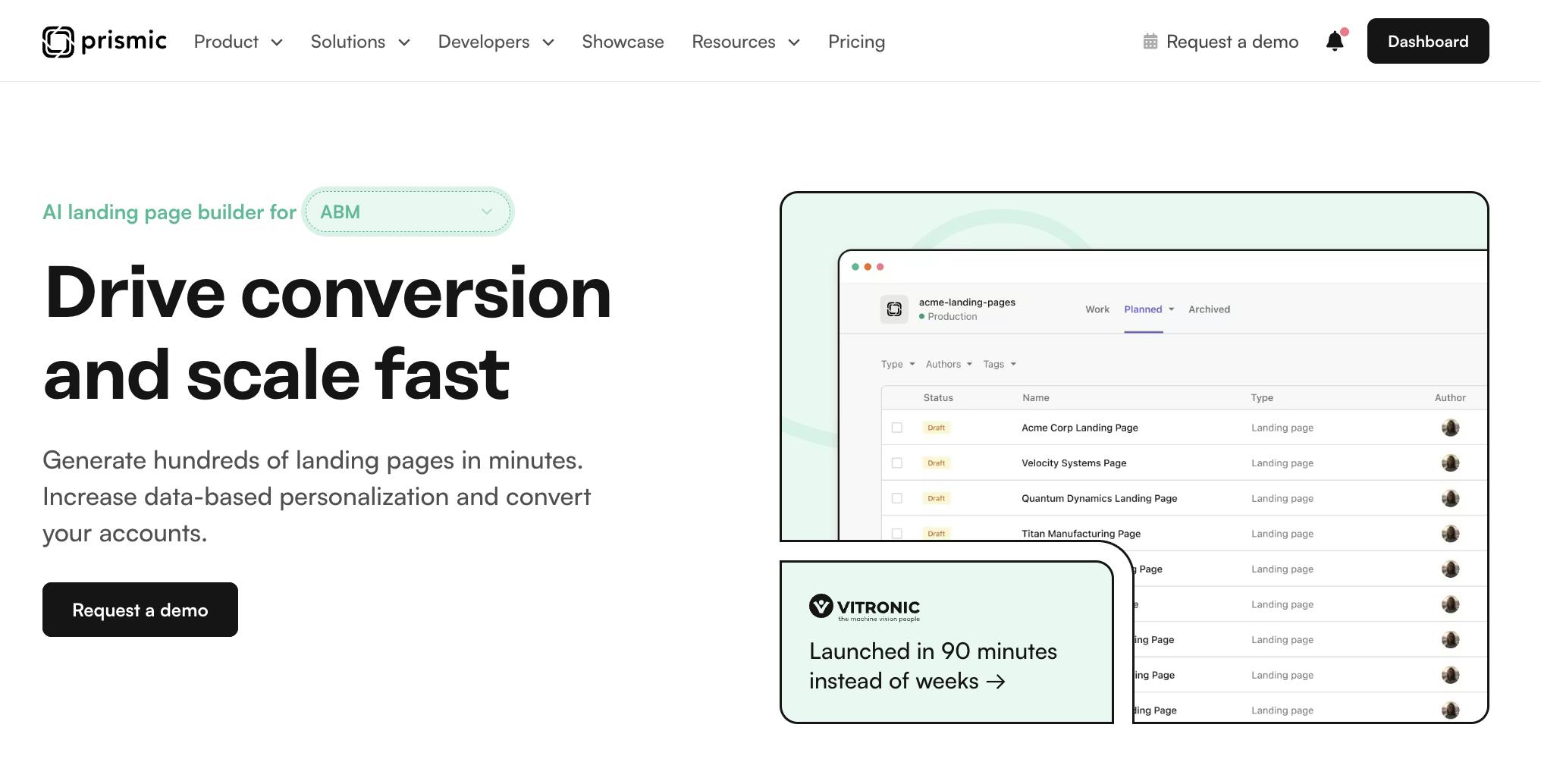
Prismic's ABM Landing Page Builder solves a specific problem: the landing page bottleneck. Marketing teams can generate hundreds of personalized landing pages from a single approved template using account data they already have, without developer involvement.
How It Works
You create one base landing page that establishes your brand, design, and core message. Then upload a CSV with account data from your CRM, Clay, or other sources (company names, industries, roles, pain points, etc.). Prismic's AI analyzes this data to identify relevant narrative angles, then generates personalized variations that adapt headlines, problem framing, use cases, and product focus areas for each account.
Pages arrive as editable drafts in organized batches, giving your team full quality control before anything goes live. Each page gets a personalized URL for account-level tracking and engagement measurement.
Key Features
- Base page as source of truth: Every variation generated from your approved template ensures brand consistency
- AI-powered narrative adaptation: Analyzes CRM data to identify the most relevant angle connecting your value proposition to each account
- Editable drafts with quality control: Pages delivered in grouped releases for team review before publishing
- CSV upload workflow: Simple data upload from existing CRM or enrichment tools like Clay
- No developer dependency: Standalone landing page builder with pre-built custom sections included
- Account-level tracking: Personalized URLs enable precise measurement of which accounts engage
- Clay integration: Direct integration to use company or contact-level data from Clay tables
The Clay + Prismic Workflow for 1:1 ABM
Prismic integrates with Clay to power fully automated 1:1 ABM campaigns. Here's the workflow:
- Enrich accounts in Clay: Use Clay to gather and enrich target account data (firmographics, technographics, intent signals, contact information)
- Generate personalized ads: Use Abyssale (integrated with Clay) to automatically create custom ad creatives for each account
- Create personalized landing pages: Prismic automatically generates tailored landing page for each account using the enriched Clay data
- Automate campaign delivery: Push everything to Make.com to automatically create LinkedIn campaigns with account-specific ad sets in Campaign Manager
- Monitor engagement: Use Clay signals to track ad post reactions and landing page visits
This workflow delivers true 1:1 ABM from ad to landing page to campaign delivery, with teams reporting average CTRs consistently above 1% (reaching 2-3% in some cases), ad engagement rates above 3%, higher demo conversion rates, and lower cost per lead compared to non-personalized campaigns.
Who It's For
Growth marketers at B2B companies who need to create personalized landing pages at scale for account-based campaigns. Teams facing time-to-market pressure with short buying windows who need quick ROI proof to justify ABM investments. Companies that understand personalization value but are constrained by manual processes.
Real Results
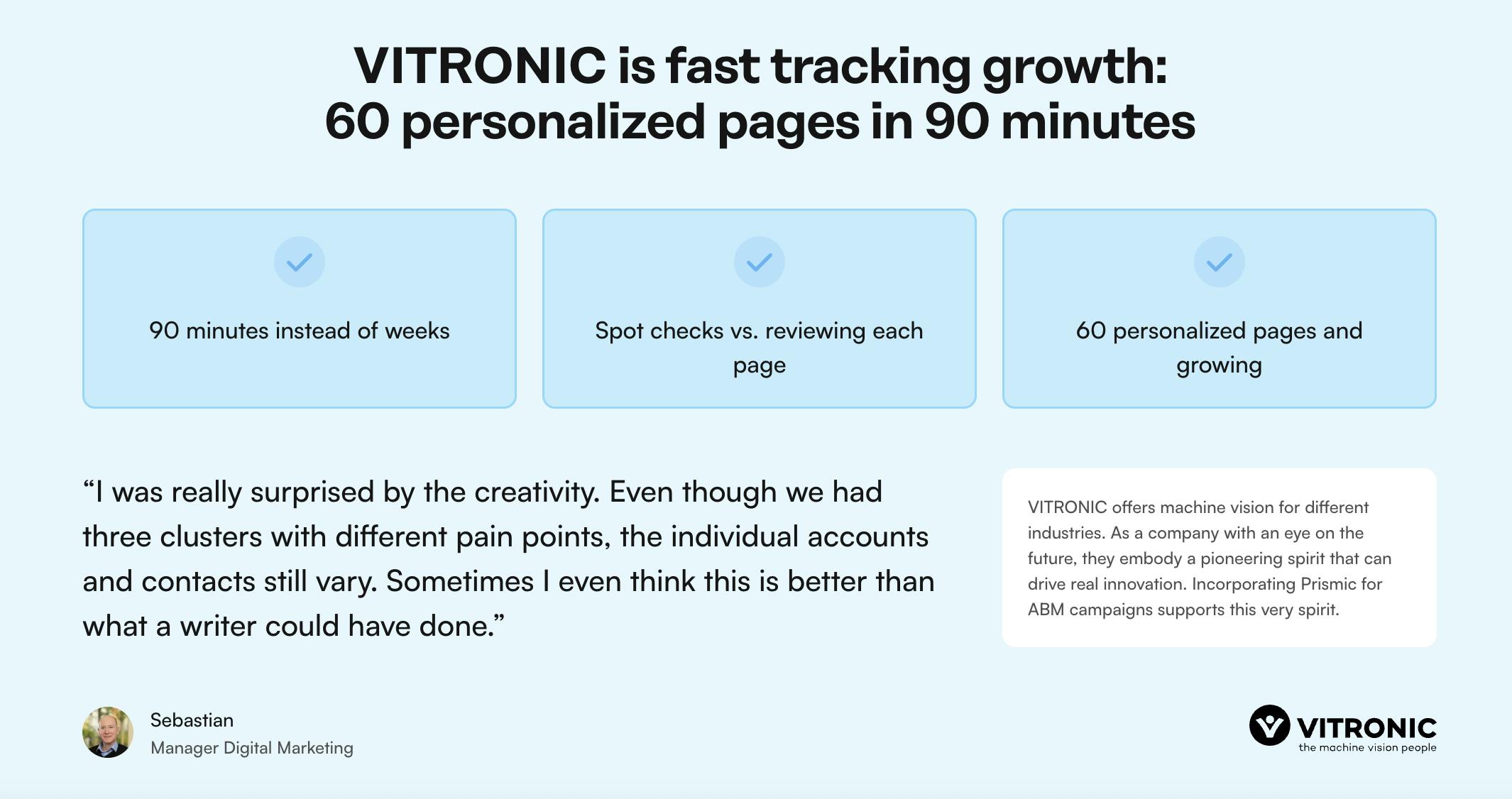
VITRONIC launched 60 personalized ABM pages in just 90 minutes, work that previously would have taken weeks. Sebastian Ramb, Manager Digital Marketing at VITRONIC, noted: "I was really surprised by the creativity. Sometimes I even think this is better than what a writer could have done, and now only spot-check 2-3 pages instead of reviewing every single page."
The Prismic field marketing team generated 300 personalized post-event landing pages in minutes using a simple CSV upload, with personalized URLs making it easy to measure engagement through existing analytics.
Limitations
- Landing page focus: Specifically designed for landing pages, not full website personalization
- Requires quality data: Output quality depends on the richness of input data from CRM or enrichment tools
- Newer product: Less established than platforms like Mutiny or Intellimize
2. Mutiny
Best for: On-site website personalization
Pricing: Mid-market to Enterprise (custom quotes)
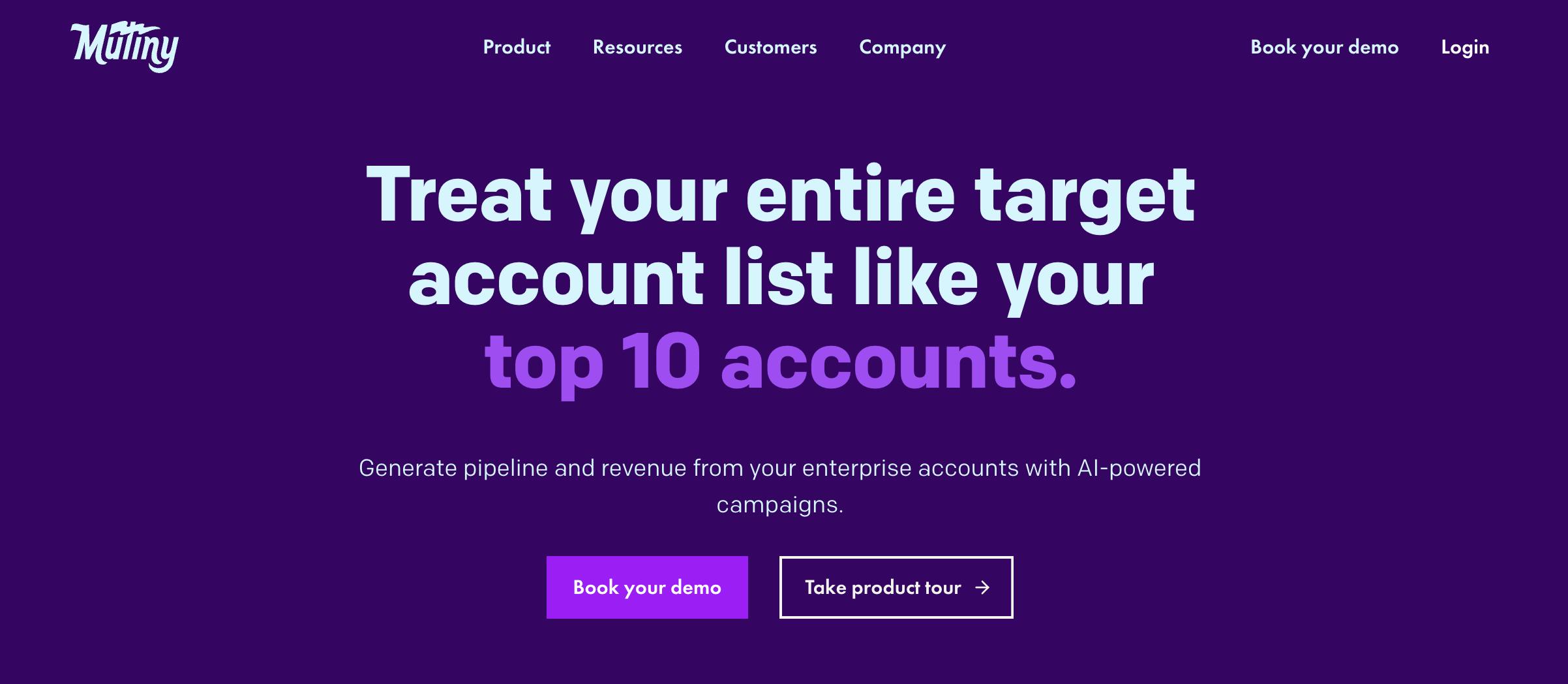
Mutiny personalizes your existing website based on visitor attributes. You can change headlines, CTAs, and content blocks without touching code, then A/B test which personalization approaches improve conversion.
Key Features
- No-code personalization: Change website content without developer involvement
- Visitor segmentation: Personalize based on company, industry, role, and behavior
- A/B testing: Test personalization approaches to understand what drives conversion
- CRM integration: Pull account data from Salesforce or HubSpot
Who It's For
Teams wanting to personalize their main website experience for different account segments. Works well when you have consistent traffic from target accounts.
Limitations
- Existing website required: Modifies current site rather than creating new landing pages
- Technical setup: Requires implementing Mutiny's script on your website
- Traffic volume needed: Personalization testing works best with significant traffic
Best Marketing Automation Platforms with ABM Features
These platforms started as marketing automation tools and added ABM capabilities over time. They work well for teams already invested in these ecosystems.
1. HubSpot Marketing Hub
Best for: All-in-one simplicity with gentle learning curve
Pricing: SMB to Mid-market (Professional: $800/month, Enterprise: $3,600/month)
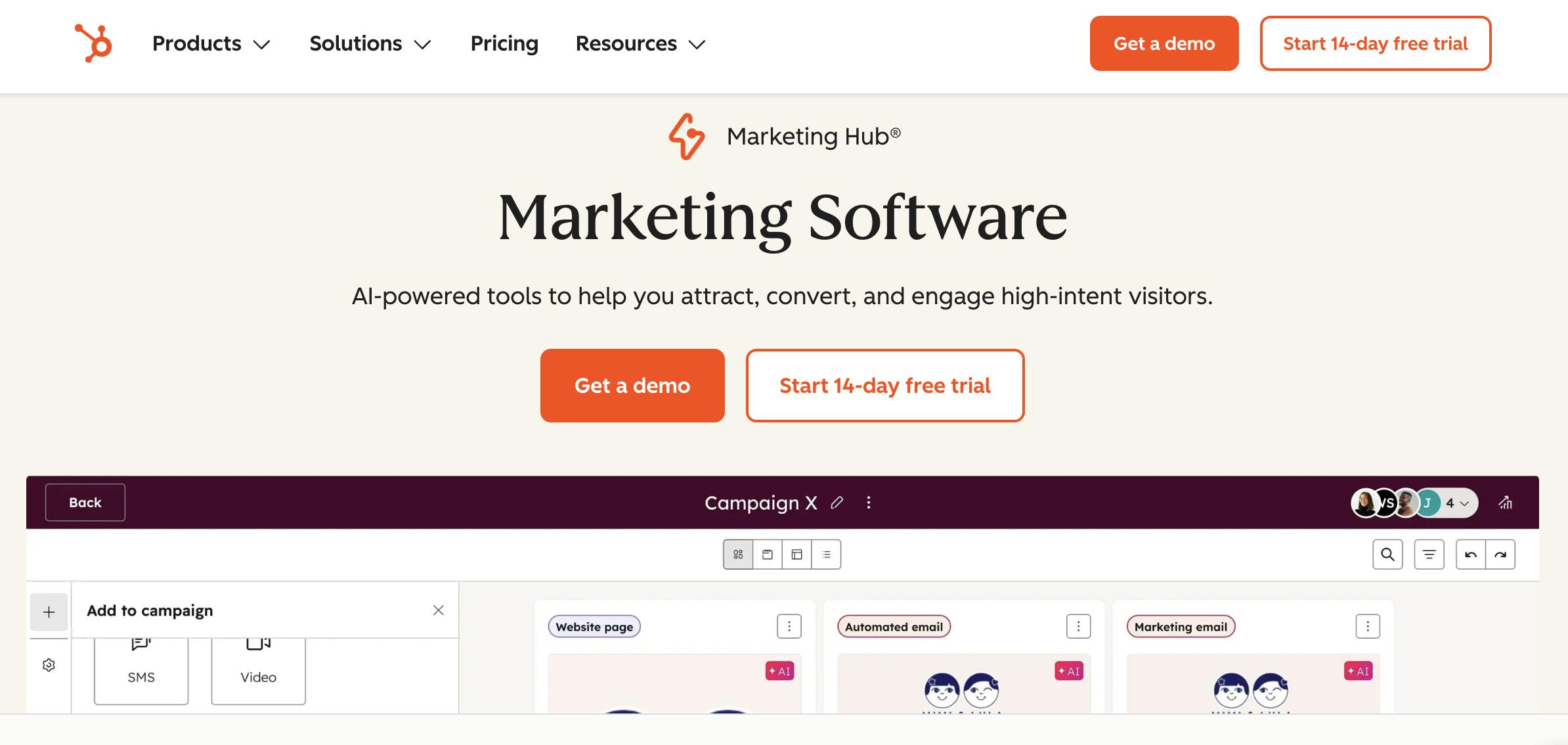
HubSpot's ABM features work well for teams already in the HubSpot ecosystem. The learning curve is gentle, and the CRM integration is seamless since it's the same platform.
Key Features
- Native CRM integration: Marketing and sales data in one system
- Target account lists: Create and manage ABM account lists
- Company scoring: Score accounts based on fit and engagement
- ABM reporting: Track account-level engagement and pipeline
- Easy to use: Intuitive interface familiar to HubSpot users
Who It's For
Small to mid-market companies already using HubSpot who want to add ABM capabilities without platform switching. Good for getting started with ABM before investing in dedicated platforms.
Limitations
- Less sophisticated ABM: Capabilities not as advanced as dedicated ABM platforms
- Limited intent data: No native third-party intent data
- Fewer advertising options: Advertising features less robust than specialized platforms
2. Marketo Engage
Best for: Marketing automation integration with sophisticated nurture workflows
Pricing: Enterprise (custom quotes, typically $20,000-$50,000+ annually)
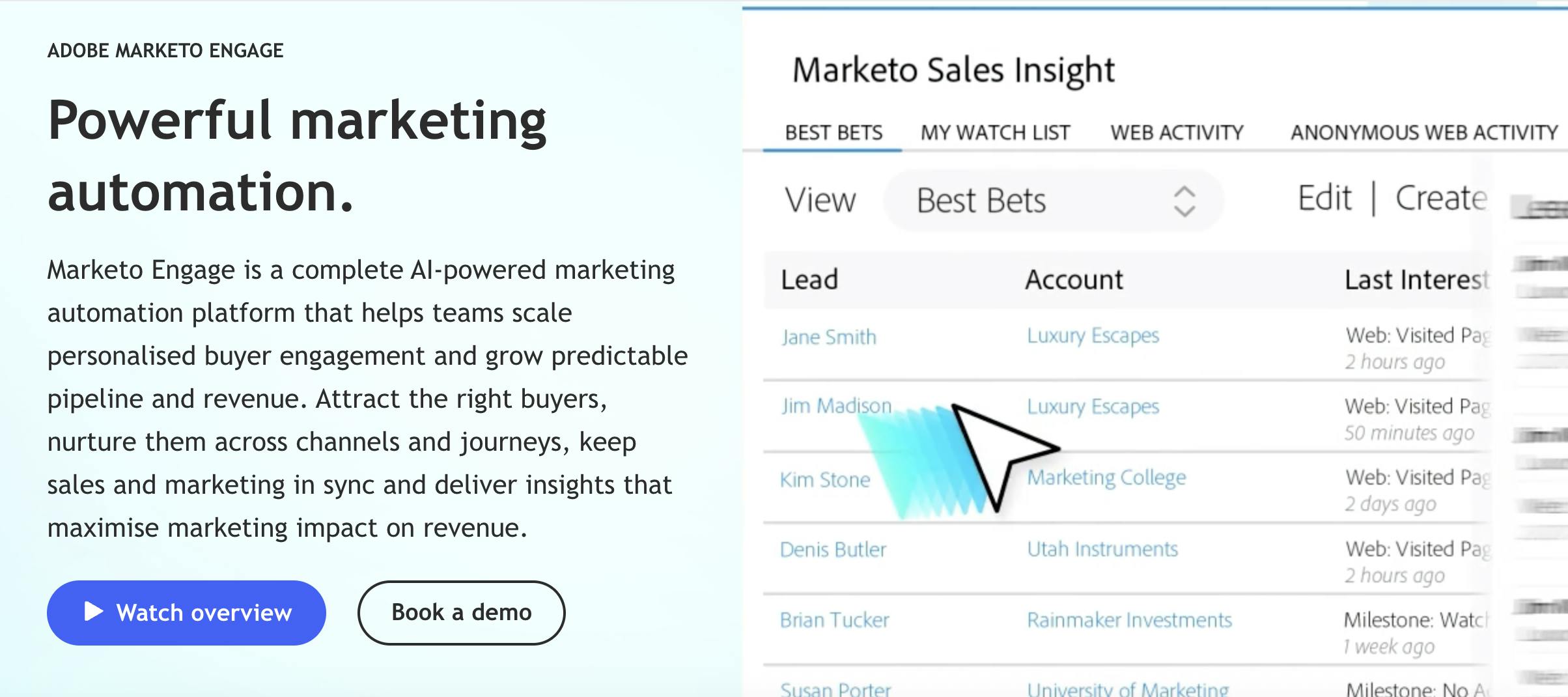
Marketo (now part of Adobe) offers ABM features layered on top of mature marketing automation. If you're already invested in the Adobe ecosystem or need sophisticated nurture workflows, Marketo's ABM add-ons extend what you're already doing.
Key Features
- Advanced nurture workflows: Sophisticated multi-touch nurture programs
- Account-based marketing add-on: ABM features integrated with marketing automation
- Adobe ecosystem integration: Works with Adobe Experience Cloud products
- Account scoring and segmentation: Score and segment at account level
- ABM reporting: Track account engagement and progression
Who It's For
Enterprises already using Marketo for marketing automation who want to add ABM capabilities. Best for companies comfortable with Marketo's complexity and already invested in Adobe ecosystem.
Limitations
- Complexity: Steep learning curve and requires dedicated administrator
- Cost: Premium pricing plus ABM add-on costs
- Not ABM-native: ABM features added to marketing automation platform rather than built from ground up
How to Choose the Right ABM Software for Your Business
The best ABM platform depends on your team's maturity, tech stack, and execution capacity.
Match Platform Type to ABM Maturity
Early-stage ABM teams often benefit from simpler tools that integrate with existing systems. Jumping straight to an enterprise platform can mean paying for capabilities you won't use for years. Mature programs may find that point solutions create more integration headaches than they solve.
Prioritize Integrations with Your Existing Tech Stack
CRM integration is non-negotiable. Salesforce and HubSpot compatibility matters for most teams. Beyond CRM, consider your marketing automation platform, data warehouse, and any enrichment tools you already use like Clay or Clearbit.
Evaluate Speed to Launch and Iterate
How quickly can your team launch campaigns and iterate? Some platforms require months of implementation before you see value. Others let you start small and expand. If you're under pressure to show results quickly, time-to-value matters as much as feature depth.
Assess Total Cost of Ownership
License fees tell only part of the story. Factor in implementation costs, training time, and ongoing resource requirements. Some platforms effectively require a dedicated admin. That's a hidden cost that can exceed the software itself.
Consider Your Landing Page Execution Strategy
Intent data and ads get accounts to your site. But the landing page is where your ABM story either connects or falls apart. Consider whether you need:
- On-site personalization for your main website (Mutiny, Intellimize)
- Personalized landing page generation at scale (Prismic)
- Both website personalization and landing pages
Why Most ABM Programs Stall at the Landing Page
Here's a pattern that shows up often: teams invest heavily in intent data and targeted ads, but the destination landing page doesn't deliver on the promise. The campaign message is personalized, the ad copy speaks to the account's industry, and then the landing page is completely generic.
A few common failure modes:
- Account insights stay siloed: Data lives in CRMs and enrichment tools but never makes it into page content
- Personalized pages take too many resources: Design, copy, and dev time that marketing teams don't have
- Manual workflows can't keep pace: Buying windows are short, and manual personalization processes move too slowly
- Shallow personalization fails to convert: Swapping a company name into a headline feels generic
This execution gap is why dedicated landing page tools exist. When one approved page can become hundreds of tailored variations, each reflecting the account's industry, pain points, and context, campaigns land in time and convert more of the accounts you're working to win.
Ready to scale your ABM landing pages?
Get started with Prismic to turn one approved page into hundreds of personalized variations using the data you already have.
FAQs about ABM platforms
You might also like...