
TL;DR – Quick picks for Unbounce landing page alternatives
The best Unbounce alternative depends on your specific needs.
For account-based marketing (ABM) campaigns requiring personalized landing pages at scale, Prismic's ABM landing page builder generates hundreds of tailored variations from a single template.
For optimization-focused teams, Instapage offers robust A/B testing.
Budget-conscious teams should consider Leadpages.
Teams already using HubSpot benefit from native CRM integration with HubSpot CMS Hub.
This guide helps you evaluate landing page builders based on personalization capabilities, pricing, and core features to make an informed decision.
Why Marketers Should Consider Unbounce Alternatives
Unbounce remains a solid landing page builder with a strong feature set, but it's not the right fit for every marketing team. Understanding when to look elsewhere helps you make a better decision.
According to user reviews and pricing analysis, several factors drive teams to evaluate alternatives:
Pricing and visitor limits: Unbounce's Build plan starts at $99 per month with a 20,000 monthly visitor limit. Some users report subscription increases of 415% within a year under new pricing models, which can be challenging for growing businesses.
Personalization depth: While Unbounce offers dynamic text replacement for personalization, this approach swaps individual tokens like company names or job titles. Many ABM programs need deeper personalization that adapts entire narratives—headlines, pain points, use cases, and social proof—based on account context.
Manual scaling challenges: Creating personalized variations for dozens or hundreds of target accounts means duplicating pages manually, which doesn't scale well for time-sensitive campaigns.
Feature access: A/B testing is only available in higher-tier plans, and Smart Traffic AI optimization requires the Optimize plan at $249 per month.
The right alternative depends on what you're optimizing for: ABM personalization, conversion testing, budget constraints, or ecosystem integration.
9 Best Unbounce Alternatives for Personalized Landing Pages
Here's an honest breakdown of the leading alternatives, organized by primary use case.
1. Prismic - Best for ABM Landing Page Personalization at Scale

What it does: Prismic's ABM landing page builder is purpose-built for B2B marketing teams running account-based campaigns. You create one approved base page, then generate hundreds of personalized variations using account data from your CRM, enrichment tools, or CSV uploads.
How personalization works: Unlike dynamic text replacement, Prismic's AI analyzes account data to identify relevant narrative angles. It generates variations that adapt headlines, pain points, use cases, and proof points based on firmographic context, not just surface-level token swaps.
Workflow: Pages arrive as editable drafts in organized batches, giving marketing full review and approval before publishing. Each page gets a personalized URL for account-level engagement tracking.
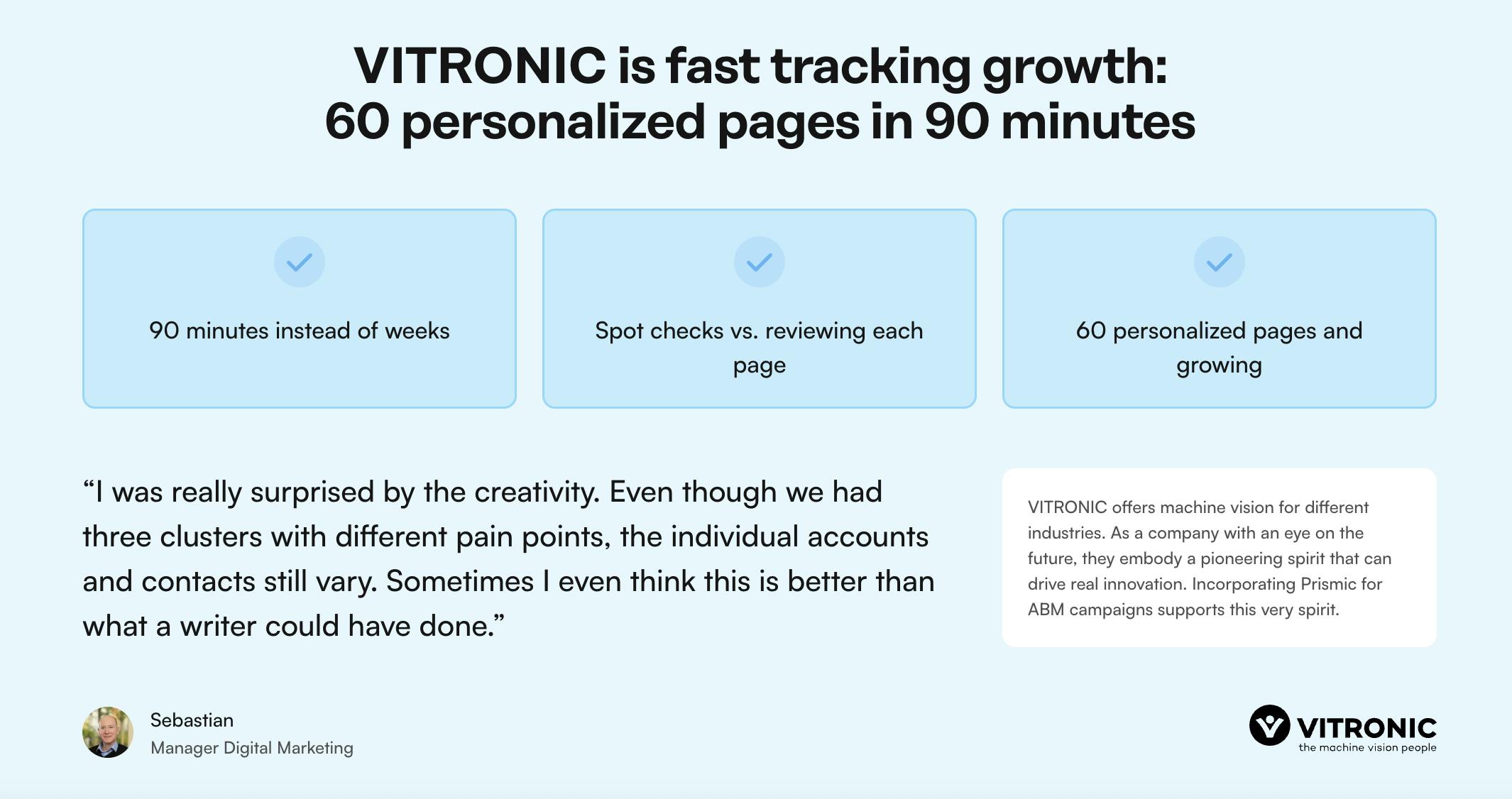
Real-world results: VITRONIC launched a 60-page personalized campaign in about 90 minutes—work that previously took weeks.
Ideal for: B2B marketing teams targeting dozens to hundreds of accounts with personalized ABM campaigns; teams wanting marketer autonomy without developer dependencies.
Limitations: Built specifically for ABM and landing page generation, so might not suit many B2C use cases perfectly.
Pricing: Mid-range. Contact for custom pricing based on campaign volume.
Want to see how Prismic's hyper-personalized landing pages work in practice?
👋 Prismic’s landing page builder is designed for teams scaling one-to-one ABM and ads without increasing production overhead.
2. Instapage - Best for Enterprise Optimization and Testing
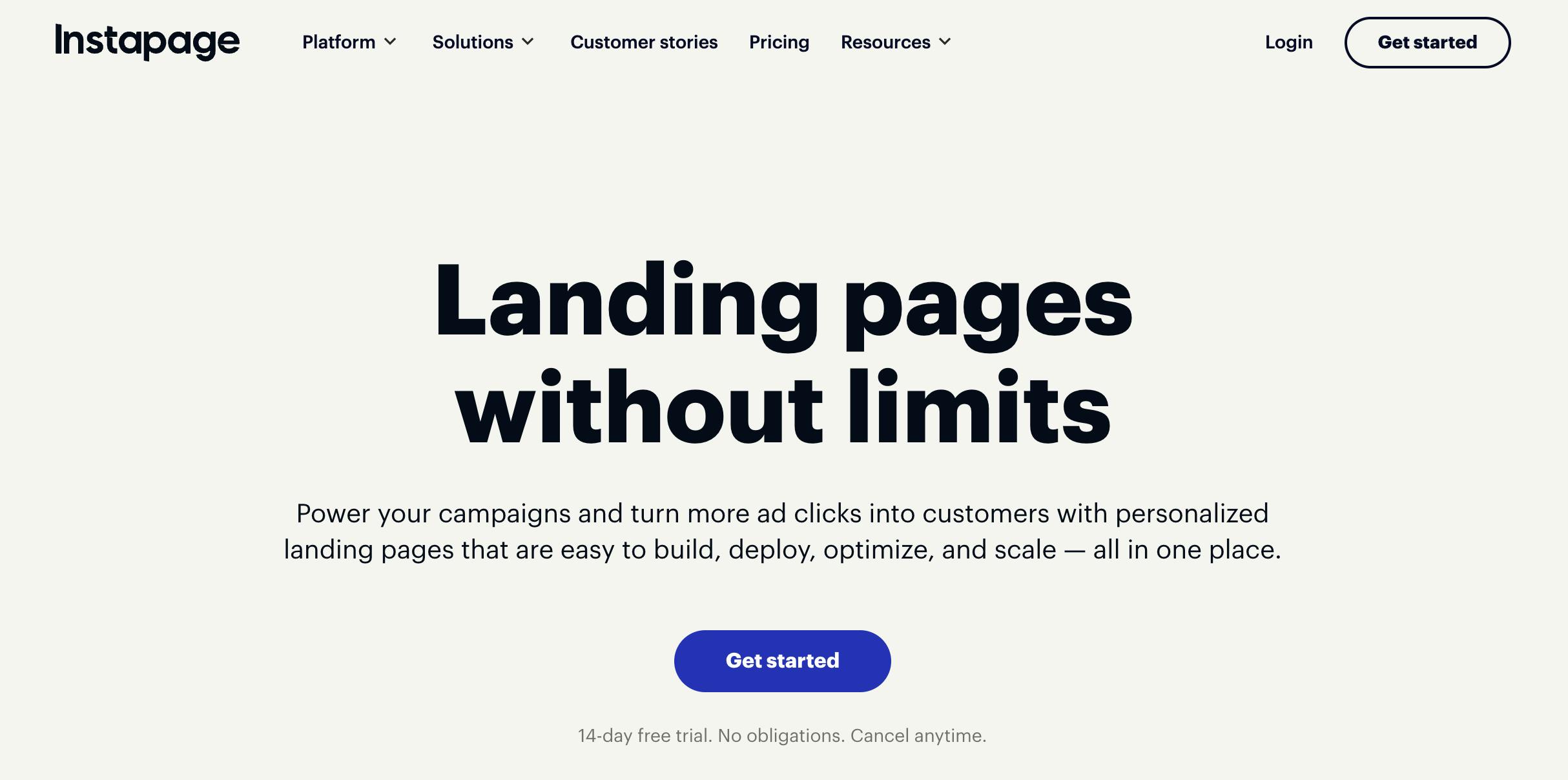
What it does: Instapage is an enterprise-grade landing page platform with strong A/B testing, heatmaps, and real-time collaboration features.
Key strengths: Instapage makes it easy to spin up unique landing pages for each campaign with seamless integrations to CRMs, ad platforms, and marketing automation tools. Heatmaps show exactly how visitors interact with pages, and built-in experimentation tools support A/B and multivariate testing.
Personalization approach: Dynamic text replacement and audience-based experiences tied to UTM parameters. Each variation requires manual setup.
Collaboration: Multiple team members can work on pages simultaneously, helpful for larger marketing teams.
Ideal for: Optimization-focused teams who prioritize testing and analytics; enterprises with larger budgets.
Limitations: Users report high pricing, with some finding it prohibitive for small businesses and startups. The Build plan costs $299 per month monthly ($199 annually) with 30,000 monthly visitors. Personalization at scale requires significant manual effort.
Pricing: Premium. Build plan starts at $199/month (annual billing), Convert plan requires custom pricing.
3. HubSpot CMS Hub - Best for Teams Already Using HubSpot
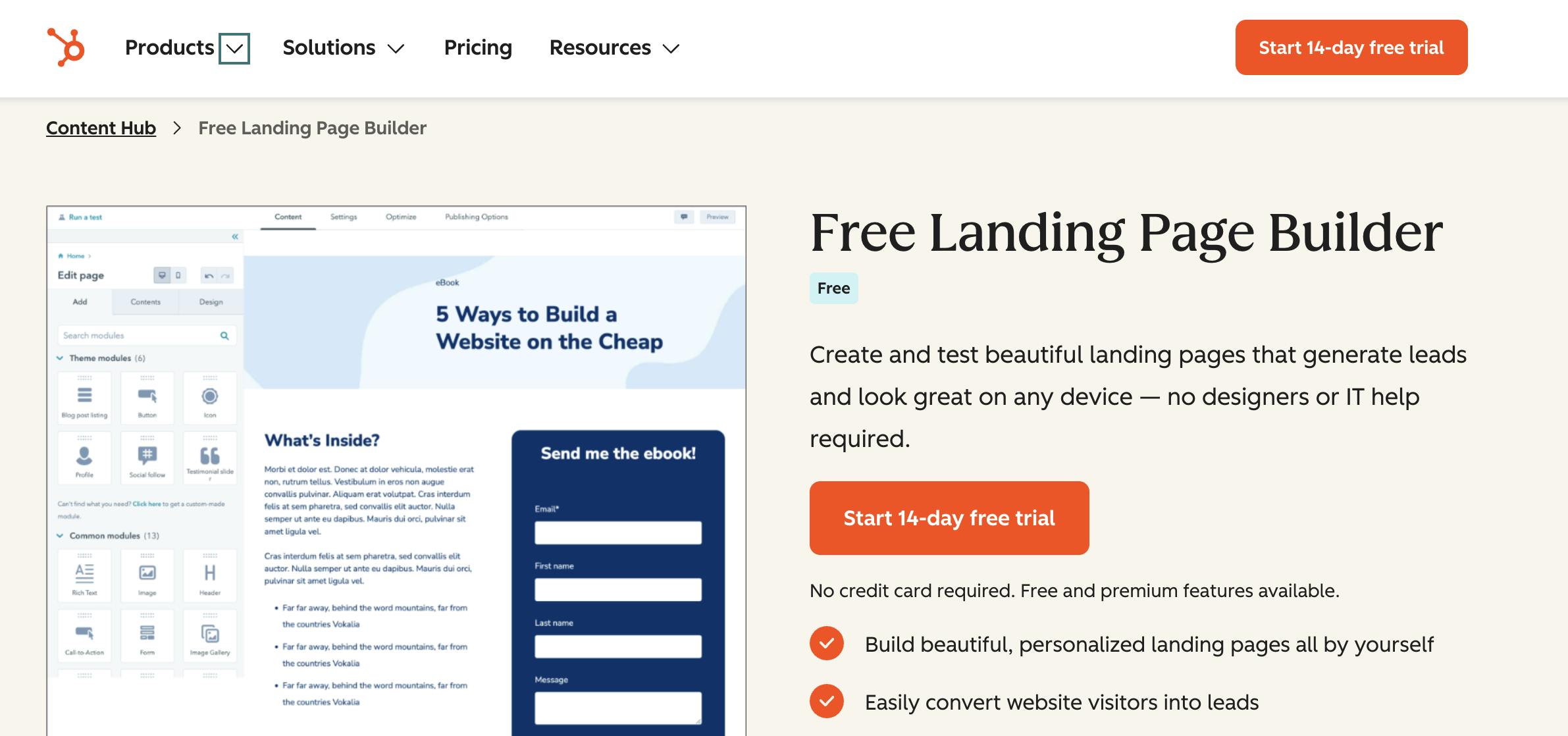
What it does: HubSpot CMS Hub integrates landing pages directly with your HubSpot CRM data, making it a natural fit for teams already in the ecosystem.
Personalization approach: Smart content lets you personalize page elements based on HubSpot contact properties. You can show different content based on country, device type, referral source, contact list membership, and ad source.
AI capabilities: HubSpot's Breeze AI can generate personalized landing pages based on prompts describing your page's purpose and ideal customer profile.
Integration advantage: Email, forms, analytics, and pages all live in one platform. No need to connect external tools.
Ideal for: Marketing teams already using HubSpot for CRM and marketing automation who want unified reporting.
Limitations: Personalization is limited to HubSpot contact data. Teams using other CRMs or enrichment tools may find the ecosystem too restrictive.
Pricing: Varies. Free tier available; advanced personalization requires Content Hub Professional or Enterprise.
4. Leadpages - Best Budget Option for Simple Lead Capture
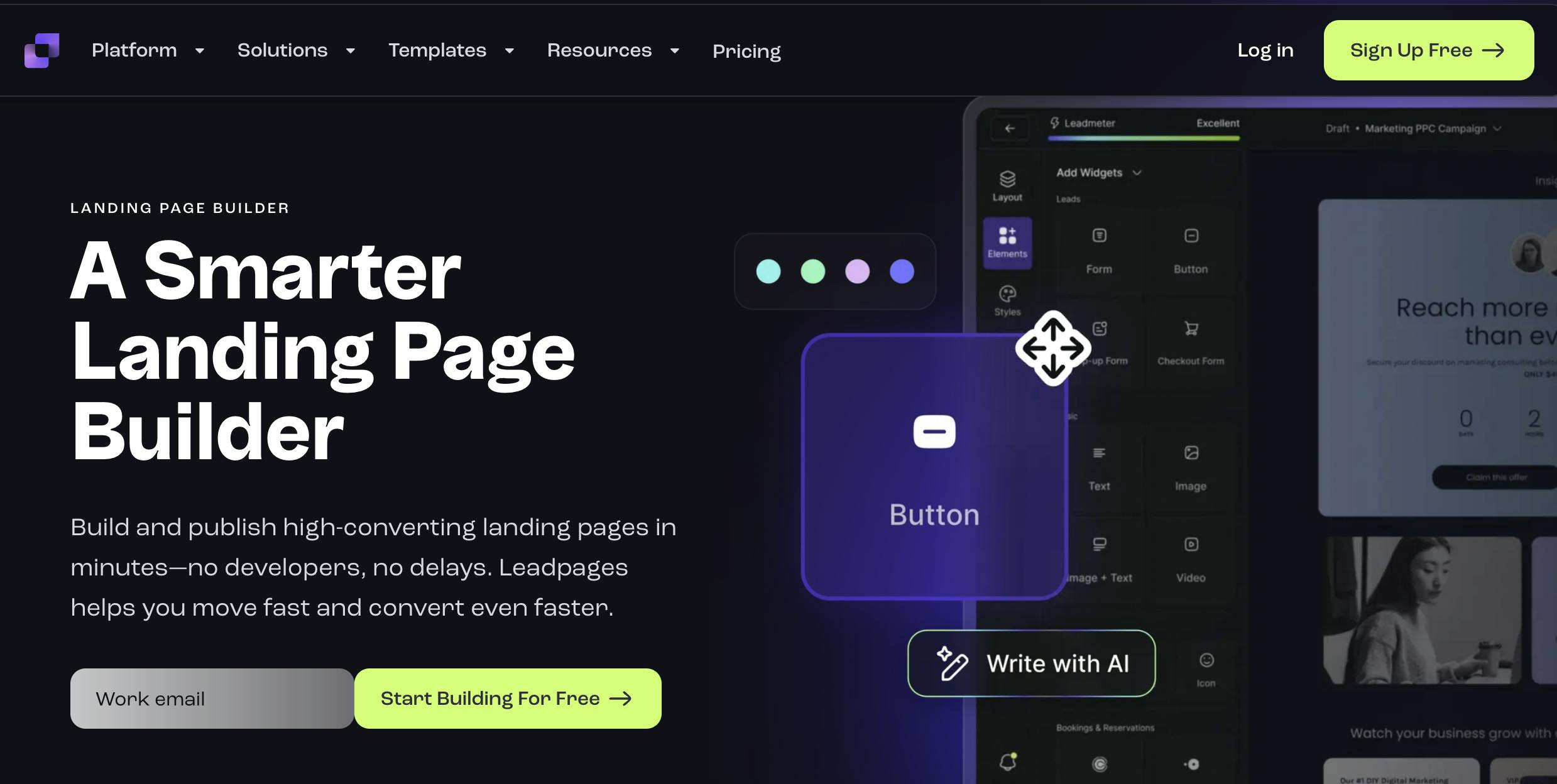
What it does: Leadpages is a straightforward landing page builder designed for small businesses and solopreneurs focused on lead generation.
Key advantage: All plans include unlimited traffic and leads, which is valuable compared to competitors with visitor caps.
Templates and ease of use: The drag-and-drop builder requires no coding skills. Users praise the professionally designed templates and high conversion rates.
Ideal for: Small teams and solopreneurs on tight budgets; businesses focused on simple lead capture rather than complex personalization.
Limitations: The Standard plan at $49/month only allows 5 landing pages, which is limiting for growing campaigns. Personalization capabilities are basic token replacement. A/B testing requires upgrading to Pro plan.
Pricing: Budget. Standard plan $37-49/month, Pro plan $74-99/month.
5. Webflow - Best for Design-First Teams
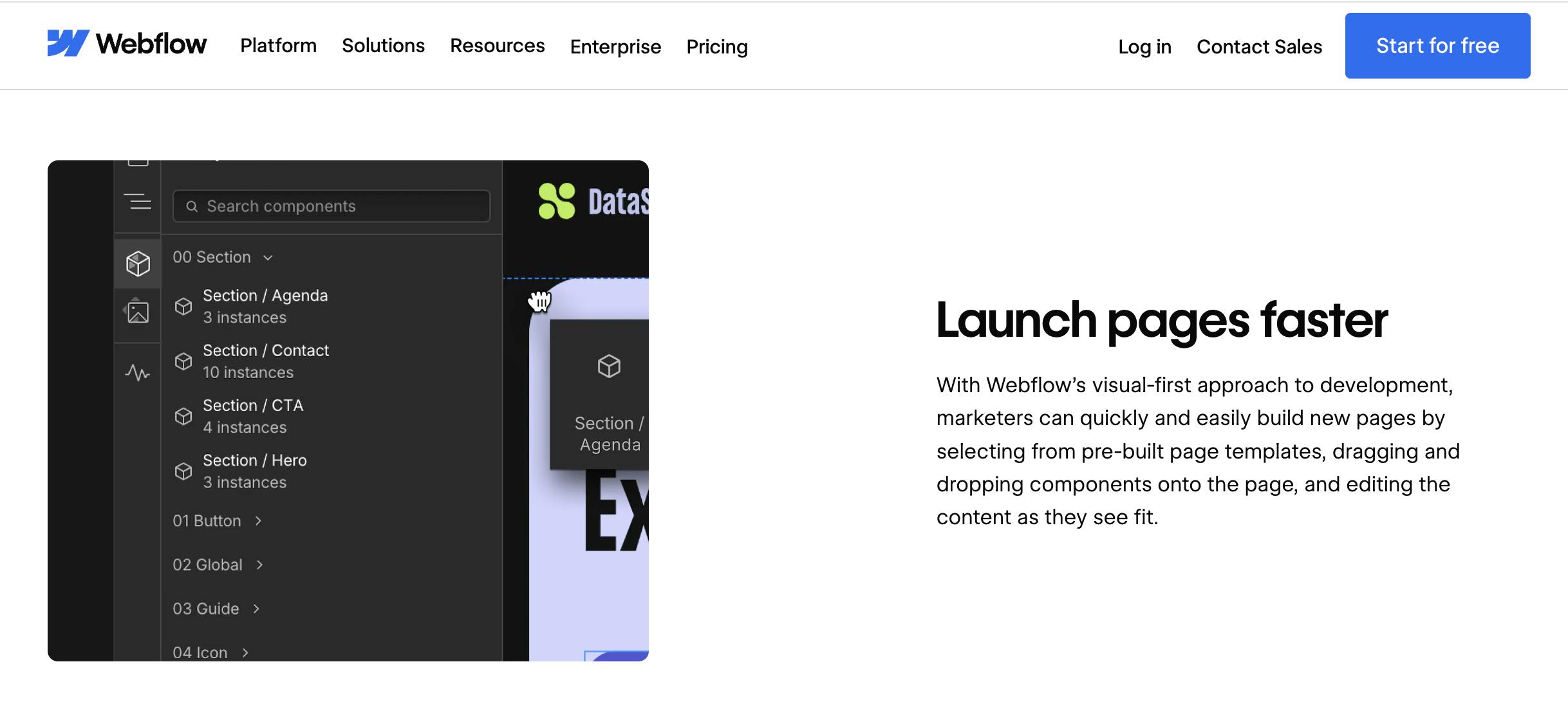
What it does: Webflow is a design-forward visual builder with CMS capabilities, popular among teams prioritizing pixel-perfect custom design.
Design control: Build custom layouts without code and manage dynamic content through Webflow's built-in CMS. Hosting is included.
Ideal for: Design-first teams who want complete creative control; agencies building custom sites for clients.
Limitations: Steeper learning curve than drag-and-drop builders. Personalization requires third-party integrations or custom code to deliver tailored experiences. Not purpose-built for landing pages or ABM campaigns.
Pricing: Mid-range. Plans start around $14/month for basic sites, higher for CMS features.
6. Landingi - Best Value with Multilingual Support
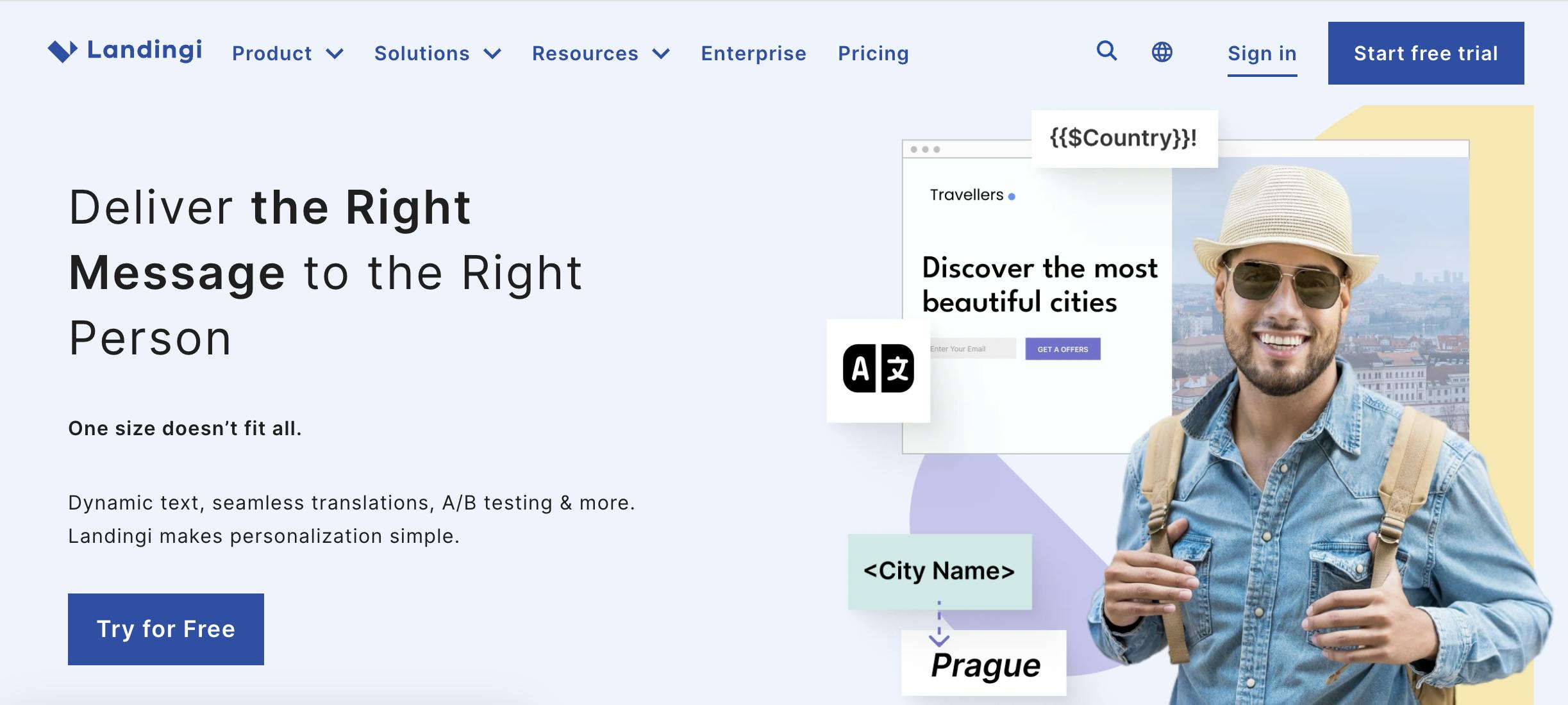
What it does: Landingi is an affordable landing page builder with programmatic page generation and multilingual support.
Scalability features: Create multiple pages from templates programmatically. Built-in localization tools support regional campaigns across languages.
Ideal for: Teams launching multilingual or regional campaigns; marketers who need good value without enterprise pricing.
Limitations: Personalization features are more limited compared to ABM-focused tools. Less robust than enterprise platforms for advanced testing.
Pricing: Budget. Plans start around $29-39/month.
7. Builder.io - Best for Technical Teams Using Modern Frameworks
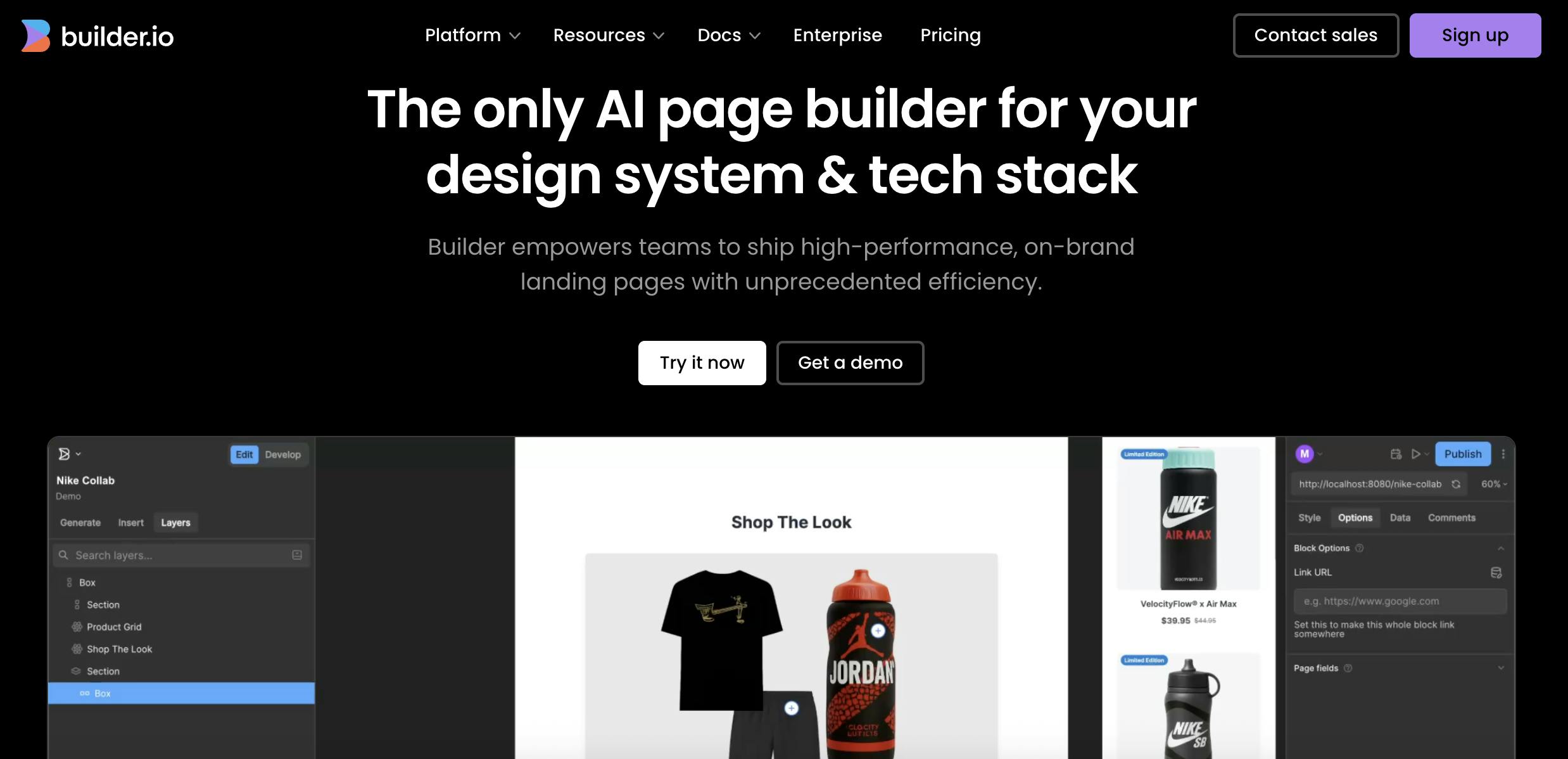
What it does: Builder.io is a headless visual builder that integrates with Next.js, React, and other modern frontend frameworks.
Technical flexibility: Marketers can make changes using the visual editor without code, while developers maintain control through the headless architecture. Reusable building blocks keep designs consistent.
Ideal for: Technical teams building on modern frameworks; companies wanting marketer autonomy with developer-controlled component systems.
Limitations: Requires developer involvement for initial setup and personalization implementation. Not beginner-friendly.
Pricing: Mid-range. Contact for pricing based on usage.
8. GetResponse - Best for Email-First Marketers
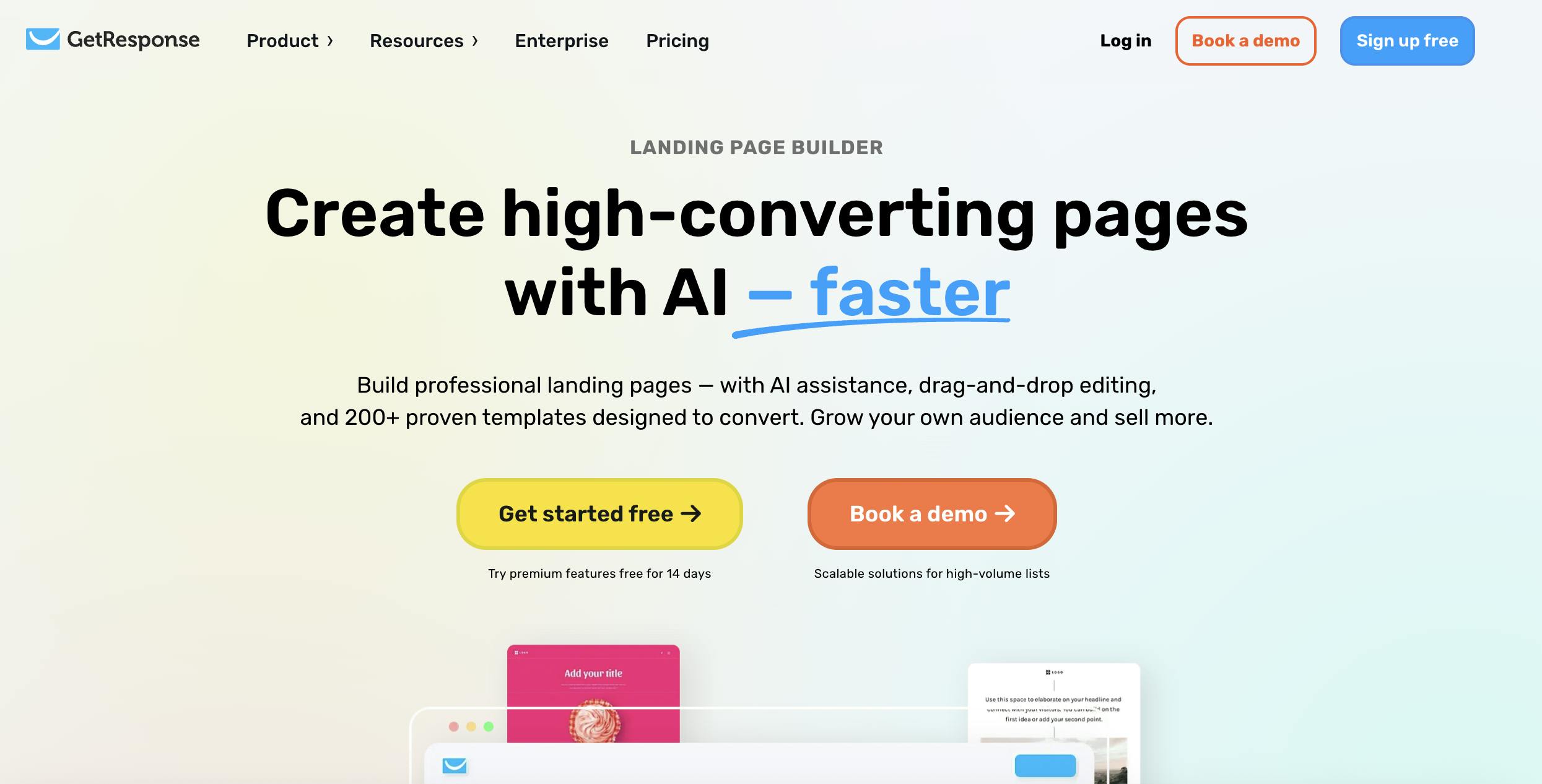
What it does: GetResponse is primarily an email marketing platform with landing page functionality built in.
Integration advantage: Pages connect directly to email sequences, and marketing automation triggers workflows based on page interactions. Webinar hosting is also included.
Ideal for: Email marketers who want landing pages to support campaigns; businesses running webinar funnels.
Limitations: Landing page builder is secondary to email features. Not suited for standalone ABM programs or complex landing page campaigns.
Pricing: Budget. Plans start around $15/month for basic email + landing pages.
9. Swipe Pages - Best for Mobile-First PPC Campaigns
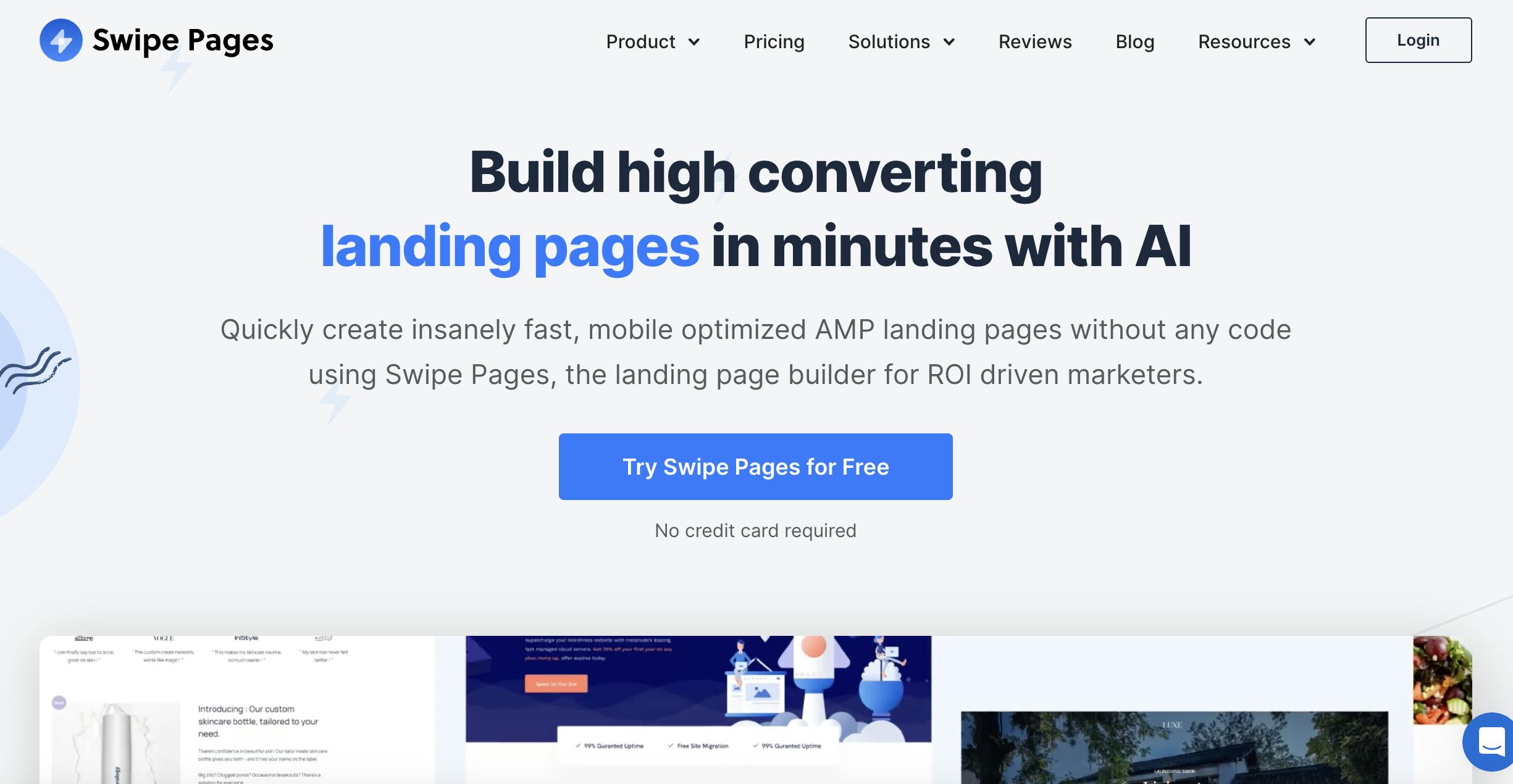
What it does: Swipe Pages is a mobile-first landing page builder with AMP support, optimized for paid media teams.
Speed optimization: AMP pages load lightning-fast on mobile devices. Templates are specifically optimized for mobile visitors.
Ideal for: PPC teams optimizing for mobile performance; campaigns where mobile speed is critical for conversions.
Limitations: Personalization options limited to dynamic text replacement. Less robust for desktop-focused campaigns.
Pricing: Budget. Plans start around $29/month.
Quick Unbounce Alternatives Comparison Table
Tool | Best For | Personalization Type | Pricing Tier |
|---|---|---|---|
Unbounce | AI-powered conversion | Dynamic text + Smart Traffic | Mid-premium |
Prismic | ABM at scale | AI narrative personalization | Mid-range |
Instapage | Enterprise optimization | Dynamic text + segments | Premium |
HubSpot CMS | HubSpot ecosystem | CRM-based smart content | Varies |
Leadpages | Budget-conscious teams | Basic tokens | Budget |
Webflow | Design-first teams | Custom code required | Mid-range |
Landingi | Multilingual campaigns | Programmatic + basic | Budget |
Builder.io | Technical teams | Custom implementation | Mid-range |
GetResponse | Email marketers | Email-tied personalization | Budget |
Swipe Pages | Mobile PPC | Dynamic text | Budget |
What to Consider When Evaluating Landing Page Builders
Not every landing page tool addresses the same use case. Here's what matters most when comparing alternatives.
Personalization Approach
Different tools handle personalization differently:
- Token replacement: Swaps basic fields like names or company details (available in most tools)
- Smart content: Shows different content blocks based on audience segments (HubSpot, Instapage)
- Narrative-level personalization: Adapts messaging, framing, and proof points based on account data (Prismic's ABM builder)
For simple lead capture, token replacement works fine. For ABM programs targeting specific accounts, narrative-level personalization drives better engagement.
Scalability Without Headcount
If you're running campaigns targeting 50+ accounts, ask: Can this tool generate variations without requiring manual duplication for each account? Some tools automate variation creation, while others require hands-on work for every page.
Data Integration
Personalization quality depends on data quality. The best tools integrate with your CRM (HubSpot, Salesforce) and enrichment platforms (Clay, Clearbit) to pull firmographics, industry context, and account signals automatically.
Marketer Autonomy
Developer dependencies slow down campaign timelines. Look for tools that give marketers control over page creation and updates while maintaining brand guardrails.
Pricing Structure
Landing page builder pricing varies significantly:
- Visitor-based limits (20,000-100,000+ per month)
- Feature gating (A/B testing, AI tools often in premium tiers)
- Domain restrictions (1-10+ domains depending on plan)
Understanding these factors helps you match your budget to actual needs.
What's the right personalized landing page builder for my team?
The right landing page builder depends on your specific use case, not just features and pricing.
For ABM programs targeting specific accounts: Prismic's ABM landing page builder turns one template into hundreds of personalized variations using your existing data—without developer involvement or production bottlenecks.
For conversion optimization and testing: Instapage and Unbounce offer the most robust A/B testing, heatmaps, and analytics for data-driven teams focused on improving performance.
For teams in the HubSpot ecosystem: HubSpot CMS Hub provides native CRM integration with smart content personalization based on contact properties.
For budget-conscious teams: Leadpages and Landingi offer affordable entry points with unlimited traffic (Leadpages) or good multilingual support (Landingi).
For design control: Webflow gives pixel-perfect creative freedom, though personalization requires custom development work.
For technical flexibility: Builder.io and Prismic work well for teams building on modern frameworks like Next.js or React.
FAQs About Unbounce Alternatives
You might also like...